
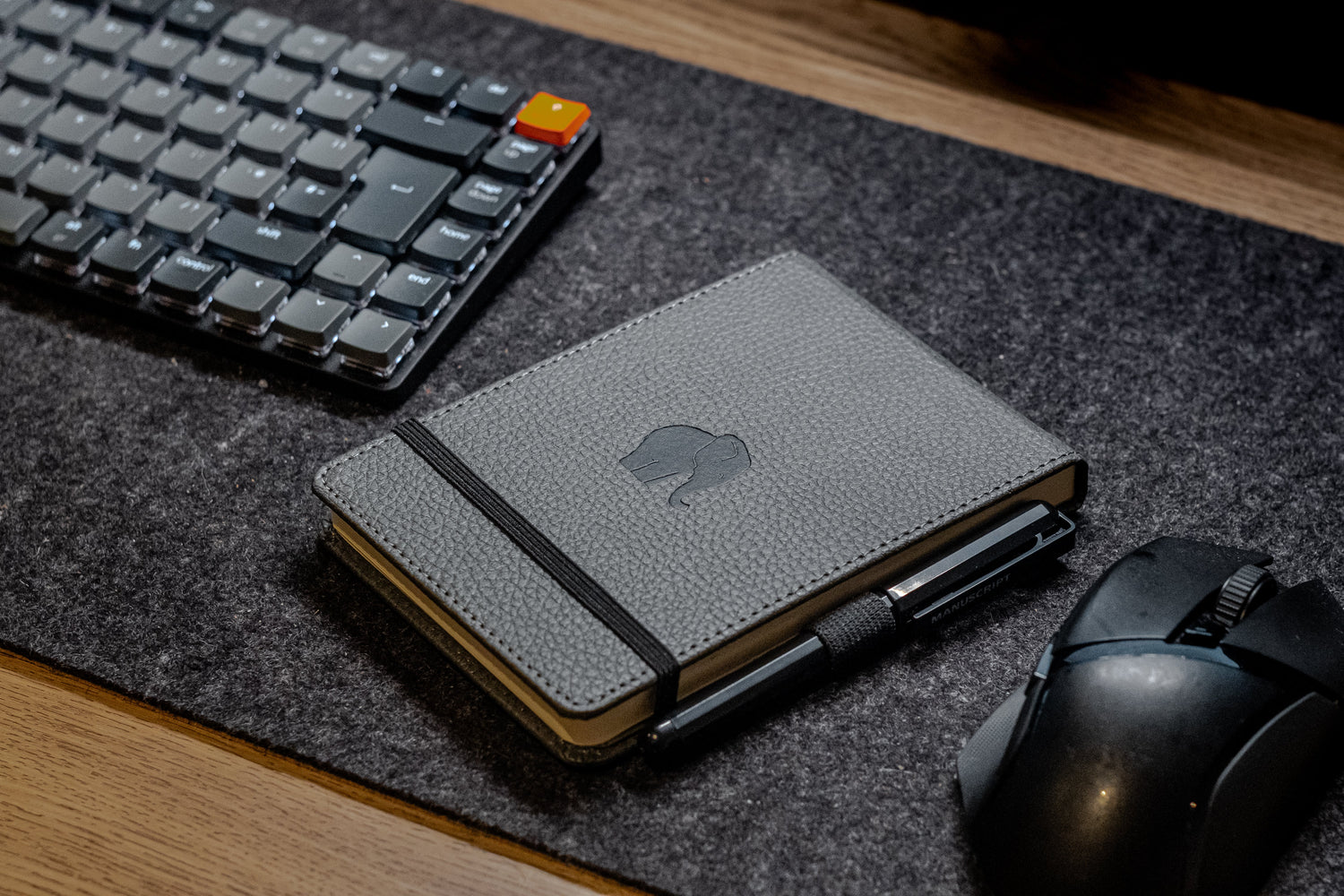
Last updated: July 2026 | A practical guide to work notebooks, meeting notes, professional notebooks, planning, office notes, creative work, and Dingbats* notebooks
A good work notebook should make your day easier. It should help you capture ideas before they disappear. Keep meeting notes in one place. Track decisions, deadlines, and follow-ups. Organize your priorities. Give you space to think clearly. And feel professional enough to use every day.
The best notebook for work is not always the most expensive one, the biggest one, or the one with the most complicated layout. It is the notebook that matches the way you actually work.
Some people need a flexible notebook for meetings, calls, lists, and quick notes. Some need structure for planning, goals, projects, and routines. Others need space for sketches, campaign ideas, diagrams, product concepts, or visual thinking.
At Dingbats*, our notebooks are designed for real writing in real life. The Wildlife Collection is ideal for flexible work notes, meetings, journaling, travel, and everyday writing. The Earth Collection works beautifully for planning, routines, trackers, priorities, and structured pages. The Pro Collection gives creative professionals more room for sketching, visual notes, moodboards, brush pens, markers, and mixed media thinking.
A work notebook should not sit untouched on your desk. It should become part of how you think.
Quick Overview: What Makes a Good Notebook for Work?
| Work Notebook Feature | Why It Matters |
|---|---|
| Quality paper | Makes daily writing smoother and more reliable |
| Comfortable size | Fits your desk, bag, and working style |
| Strong binding | Helps the notebook open and last through regular use |
| Practical features | Pen loop, elastic closure, pocket, bookmarks, perforated pages |
| Professional look | Feels appropriate for meetings, office use, and client settings |
| Flexible layout | Supports notes, lists, ideas, and planning |
| Durable cover | Protects the notebook during daily carry |
| Purpose fit | Matches how you work: flexible, structured, or creative |
The best notebook for work is the one that supports your workflow without getting in the way.
Why Your Work Notebook Matters
Work moves quickly. Meetings happen back to back. Ideas come during calls. Deadlines shift. Priorities change. Small tasks appear in the middle of bigger projects. Digital tools are useful, but sometimes you need a place to think without tabs, notifications, or screens.
That is where a work notebook helps. A notebook gives you one place to capture what matters: notes, tasks, follow-ups, ideas, sketches, plans, decisions, questions, and reminders.
A Work Notebook Can Help You:
| Work Need | How a Notebook Helps |
|---|---|
| Take meeting notes | Keeps key points and decisions together |
| Track tasks | Turns conversations into action lists |
| Plan projects | Gives you space to map ideas and next steps |
| Think clearly | Helps you slow down and process information |
| Stay organized | Keeps work notes in one reliable place |
| Prepare for meetings | Helps you list questions and priorities |
| Capture ideas | Gives quick thoughts somewhere to land |
A work notebook is not only for writing down what happened. It is for deciding what happens next.

What Makes a Notebook Good for Work?
A good work notebook should balance professionalism, comfort, and practicality.
It needs to look polished enough for meetings but still feel easy to use every day. It should be durable enough to carry around, smooth enough for regular writing, and flexible enough to handle different types of notes.
What to Look For in a Work Notebook
| Feature | Why It Matters |
|---|---|
| Smooth paper | Makes writing more comfortable |
| Good pen performance | Helps prevent distracting ink issues |
| Lay-flat usability | Makes writing during meetings easier |
| Elastic closure | Keeps the notebook closed in your bag |
| Pen loop | Keeps your pen attached and ready |
| Expandable pocket | Holds loose notes, receipts, cards, and references |
| Bookmarks | Helps you find active pages quickly |
| Perforated pages | Useful for removing lists or action notes |
| Durable cover | Helps the notebook survive daily work use |
A work notebook should feel good in your hand, on your desk, and in your bag. If it is annoying to use, you will stop using it.
Best Notebook for Meetings
Meetings are one of the most common reasons people need a work notebook. A good meeting notebook should help you write quickly, keep notes organized, and turn discussions into clear follow-ups. You do not need a complicated system. You need a page that can capture the essentials.
What to Write in a Meeting Notebook
| Meeting Section | What to Capture |
|---|---|
| Date and meeting title | Helps you find the notes later |
| Attendees | Records who was involved |
| Key points | Summarizes the main discussion |
| Decisions | Captures what was agreed |
| Action items | Turns the meeting into next steps |
| Deadlines | Keeps timing clear |
| Questions | Notes what still needs answering |
| Follow-ups | Helps you know what to do after |
The Dingbats* Wildlife Collection is a strong choice for meetings because it is flexible, practical, and easy to use for everyday work notes. If your meetings often lead to action plans, the Earth Collection is also useful because it supports more structured organization.
A meeting notebook should help you leave the room with clarity. Not just pages of scattered notes.

Best Notebook for Planning and Priorities
Some workdays need more than notes. They need structure.
A planning notebook can help you manage priorities, deadlines, routines, goals, projects, and weekly focus. This is especially useful if your work includes multiple responsibilities, campaigns, clients, launches, reports, or recurring tasks.
Work Planning Pages to Create
| Page Idea | Why It Helps |
|---|---|
| Weekly priority page | Keeps the most important tasks visible |
| Project tracker | Shows progress across moving parts |
| Deadline list | Prevents dates from getting lost |
| Meeting follow-up page | Groups action items in one place |
| Goal page | Connects daily tasks to bigger outcomes |
| Campaign planner | Maps content, timing, and responsibilities |
| Decision log | Records what was decided and why |
| Waiting-on list | Tracks things you need from others |
The Dingbats* Earth Collection is ideal for planning because it supports structure, routines, trackers, priorities, goals, and organized note-taking.
A planning notebook should not make work more complicated. It should make the next step easier to see.

Best Notebook for Creative Work
Not all work notes are linear. Creative professionals often need space for sketches, layouts, mind maps, moodboards, visual notes, product concepts, lettering ideas, campaign hooks, thumbnails, and early drafts. A creative work notebook needs paper and space that support more than writing.
Creative Work Notebook Uses
| Creative Use | How a Notebook Helps |
|---|---|
| Moodboards | Collects visual direction and references |
| Sketches | Captures early concepts quickly |
| Campaign ideas | Holds hooks, messages, and angles |
| Product concepts | Combines notes and visuals |
| Visual notes | Makes diagrams and systems easier |
| Color tests | Helps compare palettes |
| Storyboards | Maps scenes, posts, or sequences |
| Brainstorms | Gives ideas room to connect |
The Dingbats* Pro Collection is best for creative work because its 160gsm mixed media paper supports sketching, brush pens, markers, calligraphy, visual notes, light washes, collage, and layered thinking.
For creative work, a notebook is not only a place to record ideas. It is where ideas begin to take shape.

Hardcover vs Softcover for Work
Both hardcover and softcover notebooks can work well professionally. The best choice depends on where and how you use your notebook.
A hardcover notebook feels more structured and protective. It works well for desk use, meetings, long-term notes, and professional settings. A softcover notebook feels lighter and more flexible, which makes it useful for travel, commuting, and everyday carry.
Hardcover vs Softcover Work Notebook
| Feature | Hardcover Notebook | Softcover Notebook |
|---|---|---|
| Feel | Structured and sturdy | Flexible and lighter |
| Best for | Meetings, desk notes, long-term records | Travel, bags, movement, casual work notes |
| Protection | More protective | More portable |
| Desk use | Stable and polished | Relaxed and flexible |
| Bag use | Durable but heavier | Easier to carry |
| Professional look | Classic | Minimal and practical |
For work, hardcover is often best if the notebook stays mostly in meetings or on a desk. Softcover is useful if the notebook travels with you every day.

What Size Notebook Is Best for Work?
The best notebook size for work depends on how much space you need and how often you carry it. A larger notebook gives you more room for meeting notes, project planning, diagrams, and visual thinking. A smaller notebook is easier to carry but may feel limited for long notes.
Work Notebook Size Guide
| Work Use | Best Size Style |
|---|---|
| Meetings | A5+ or similar everyday size |
| Desk planning | A5+ or larger |
| Creative work | B5 or larger |
| Travel work notes | Softcover or smaller format |
| Quick daily notes | Compact notebook |
| Project planning | Larger pages or dotted layout |
| Visual thinking | B5 or mixed media format |
The Wildlife Collection works well for everyday work notes. The Earth Collection is useful for structured planning. The Pro Collection gives more space for creative and visual work. The right size is the one you will actually carry and use.

Lined, Dotted, Grid, or Plain: Which Is Best for Work?
The ruling matters because it shapes how you use the page.
Some people need lines to keep meeting notes neat. Others prefer dotted pages for flexible layouts, trackers, diagrams, and planning. Plain pages work well for sketches and visual thinking.
Best Ruling for Work Notes
| Ruling | Best For |
|---|---|
| Lined | Meeting notes, writing, summaries, lists |
| Dotted | Planning, bullet-style pages, trackers, flexible layouts |
| Grid | Tables, systems, diagrams, technical notes |
| Plain | Sketching, visual notes, creative work |
There is no single best ruling for work. For everyday writing and meetings, lined pages are often the easiest. For planning and systems, dotted pages offer more flexibility. For creative work, plain or mixed media pages can feel more open. Check out all Dingbats* rulings here.
Features That Matter Most in a Work Notebook
A work notebook needs to handle real use. That means carrying, opening, closing, writing, referencing, storing loose notes, and finding your place quickly.
Useful Work Notebook Features
| Feature | Why It Helps at Work |
|---|---|
| Pen loop | Keeps your pen attached and ready |
| Elastic closure | Keeps the notebook closed in a bag |
| Expandable pocket | Holds business cards, receipts, and loose notes |
| Bookmarks | Helps you find active pages quickly |
| Lay-flat design | Makes writing more comfortable |
| Perforated pages | Lets you remove lists or notes cleanly |
| Smooth paper | Makes daily writing more enjoyable |
| Durable cover | Supports regular use |
These features are not just extras. They reduce small frictions that can stop you from using the notebook consistently.
Work Notebook Page Setups
A notebook becomes more useful when you give pages clear jobs. You do not need to turn your notebook into a complicated system. A few simple page setups can make work easier.
1. Daily Work Log
Use one page per day or half page per day.
Include:
- date
- top three priorities
- meetings
- notes
- action items
- follow-ups
This keeps each workday easy to review.
2. Meeting Notes Template
For each meeting, write:
- meeting title
- date
- attendees
- key points
- decisions
- action items
- deadlines
This makes your notes easier to scan later.
3. Weekly Priorities Page
At the start of each week, create a simple page for:
- main priorities
- deadlines
- meetings
- people to follow up with
- tasks to move forward
- tasks to postpone
This helps your week feel less scattered.
4. Project Tracker
Use a spread to track:
- project name
- owner
- next step
- deadline
- status
- blockers
- notes
This is useful when you are managing several things at once.
5. Waiting-On List
Create a page for things you are waiting to receive from other people.
Include:
- person
- item
- date requested
- follow-up date
- status
This is one of the simplest ways to stay organized at work.
6. Ideas Page
Keep one section for ideas that do not yet have a home.
This can include:
- campaign ideas
- product ideas
- content ideas
- meeting improvements
- process notes
- customer insights
- design thoughts
A work notebook should leave space for unexpected thinking.
How to Organize a Work Notebook
A work notebook does not need to be perfect. It needs to be searchable enough for you. A few small habits can help.
Simple Work Notebook Organization Tips
| Tip | Why It Helps |
|---|---|
| Date every page | Makes notes easier to find |
| Use headings | Helps you scan quickly |
| Mark action items clearly | Turns notes into tasks |
| Keep a follow-up page | Prevents loose tasks from disappearing |
| Use bookmarks | Helps you return to active sections |
| Review weekly | Keeps the notebook useful |
| Use the pocket for loose papers | Keeps related items together |
| Tear out temporary pages if needed | Prevents clutter |
The goal is not to make the notebook look perfect. The goal is to make your work easier.
Digital Notes vs Paper Notebook for Work
Digital tools are useful for collaboration, reminders, files, and shared documents. A paper notebook is useful for thinking, listening, writing, sketching, planning, and processing without distractions. They do different jobs.
Paper Notebook vs Digital Notes
| Tool | Best For |
|---|---|
| Paper notebook | Meetings, thinking, brainstorming, planning, personal notes |
| Digital tools | Sharing, searching, reminders, team collaboration, storage |
| Both together | Best for a complete work system |
A work notebook does not need to replace your apps. It can support them. Use the notebook to think, capture, and clarify. Use digital tools to share, schedule, and store what needs to move forward.
Which Dingbats* Notebook Is Best for Work?
Different types of work need different notebooks.
Dingbats* Work Notebook Guide
| Dingbats* Collection | Best For | Why Choose It |
|---|---|---|
| Wildlife Collection | Meetings, everyday work notes, journaling, travel notes | Flexible, practical, durable, and easy to use daily |
| Earth Collection | Planning, routines, goals, priorities, project tracking | Structured and ideal for organizing work systems |
| Pro Collection | Creative work, sketching, visual notes, moodboards | 160gsm mixed media paper for visual and creative thinking |

Best Notebook for Work by Role
Different roles use notebooks differently.
Work Notebook by Profession
| Role | Best Notebook Use |
|---|---|
| Manager | Meeting notes, priorities, follow-ups |
| Entrepreneur | Ideas, planning, decisions, strategy |
| Designer | Sketches, moodboards, visual notes |
| Marketer | Campaign concepts, content plans, brainstorms |
| Writer | Drafts, outlines, notes, quotes |
| Consultant | Client notes, project summaries, action lists |
| Student worker | Study notes, shifts, deadlines |
| Researcher | Observations, summaries, references |
| Teacher | Lesson ideas, notes, planning |
| Freelancer | Client details, invoices, project trackers |
A notebook becomes more valuable when it reflects the kind of work you actually do.
Common Work Notebook Mistakes
A work notebook should support your day, not become another source of pressure.
Mistakes to Avoid
| Mistake | Better Approach |
|---|---|
| Making the system too complicated | Keep page layouts simple |
| Not dating notes | Add dates to every page |
| Mixing tasks without review | Review action items weekly |
| Using the wrong size | Choose one you will carry |
| Ignoring the index or bookmarks | Mark important pages |
| Saving the notebook for “perfect” notes | Use it freely |
| Writing everything without priorities | Highlight decisions and actions |
| Never reviewing old pages | Look back regularly |
The best work notebook is not the neatest one. It is the one that helps you move.
Our Verdict
The best notebook for work is the one that helps you think, write, plan, and follow through. It should be practical enough to carry. Professional enough to use in meetings. Comfortable enough for long notes. Durable enough for daily use. Flexible enough for changing priorities. And enjoyable enough that you actually reach for it.
Dingbats* notebooks are designed for different kinds of work. The Wildlife Collection supports everyday notes, meetings, travel, and journaling. The Earth Collection supports planning, routines, goals, priorities, and structure. The Pro Collection supports creative thinking, sketches, visual notes, and mixed media.

Leave a comment
This site is protected by hCaptcha and the hCaptcha Privacy Policy and Terms of Service apply.