
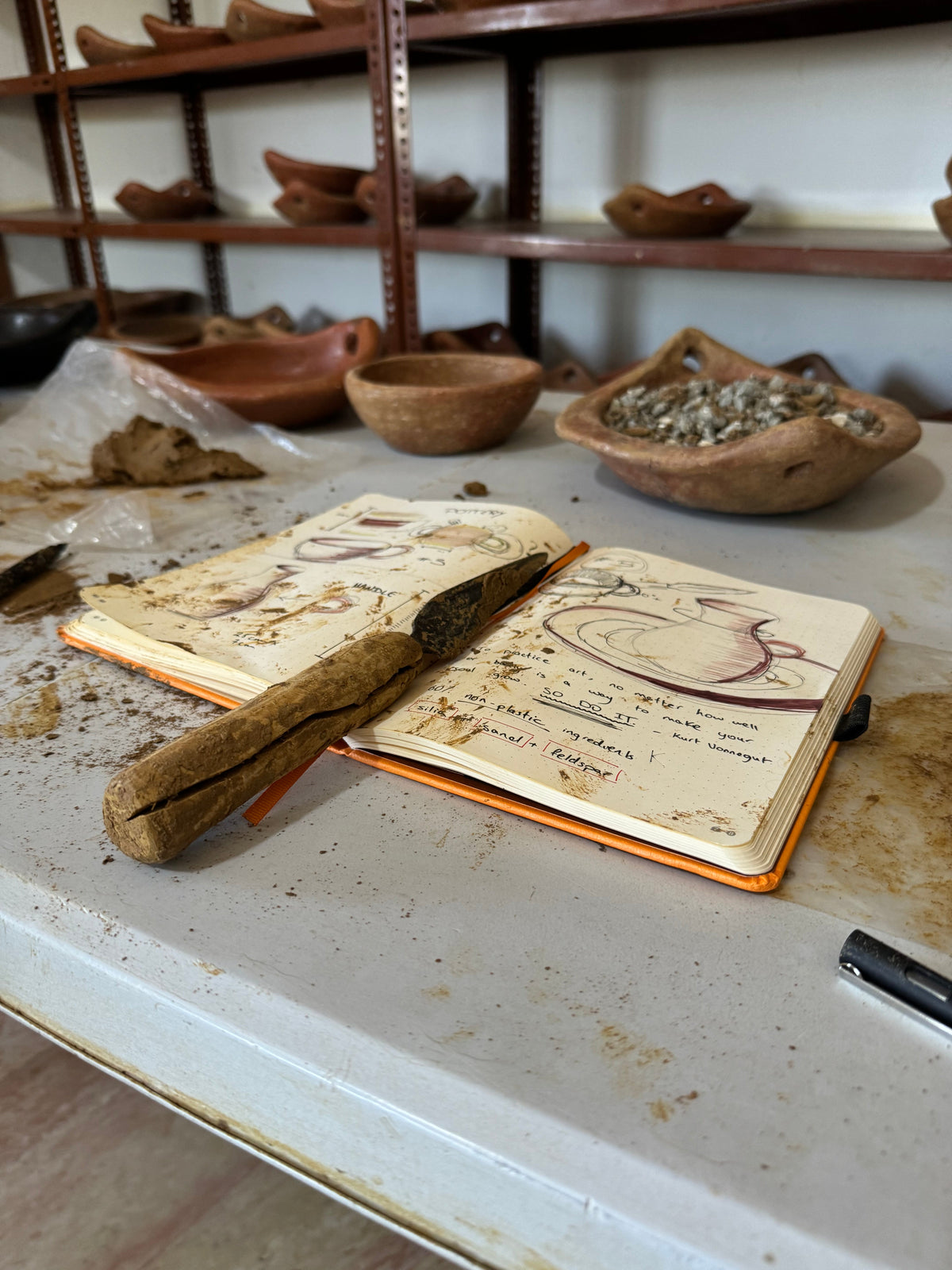
Be honest. How many unused notebooks do you own?
One sitting on your desk? Two tucked away in a drawer? Maybe a whole collection of beautiful notebooks that you've promised yourself you'll start using someday?
You bought them because you loved the covers, the paper, the colors, or simply the feeling of opening a brand-new notebook.
But when it comes to actually writing on that first page, something happens. Suddenly, you can't think of anything worth writing.
What if you make a mistake? What if your handwriting looks messy? What if you start using it for one thing and later realize you wanted it for something else?
So you close the notebook. Put it back on the shelf. And tell yourself you'll start tomorrow.
Sound familiar?
You're definitely not alone in loving a notebook so much that you almost don't want to use it.
But here's the thing.
A notebook doesn't become less beautiful when you start writing in it. It becomes yours.
Whether you have one empty notebook or an entire collection waiting to be filled, here are 10 creative ways to finally give those blank pages a purpose.
1. Start With the Messiest Page Possible
Let's get the most intimidating part out of the way. The first page.
For some reason, that perfectly clean page can feel like the most important one in the entire notebook.
You want your handwriting to look good. You want your first entry to feel meaningful. You want everything to be organized from the beginning.
But what if you deliberately made the first page imperfect?
Write your name in the middle.
Doodle around it.
Test a few pens.
Make a list of random words.
Draw something you're terrible at drawing.
The goal isn't to create something impressive.
It's to remove the pressure to be perfect.
Once you've made that first mark, the notebook stops being an untouched object and starts becoming something you can actually use.
Try this: Write the words "This notebook doesn't have to be perfect" across the first page.
Then turn it over and begin.
2. Create a Collection of Random Thoughts
Not every notebook needs a carefully defined purpose. Sometimes, the best use for one is simply collecting the things that pass through your mind.
That interesting idea you had while walking.
A funny conversation you overheard.
A question you suddenly wanted to research.
A phrase you liked.
A thought that doesn't really belong anywhere else.
Instead of trying to organize everything immediately, let the notebook become a home for those little moments.
You might be surprised by how interesting they become when you look back at them.
Some ideas will seem completely ridiculous.
Others might turn into something worth exploring.
And some will simply remind you of what was on your mind at a particular moment.
That's what makes a notebook personal.
It doesn't need to make sense to anyone else.

3. Keep an "Ideas I Might Actually Try" List
Have you ever had an idea that sounded exciting in the moment, only to forget it completely a few days later?
Maybe you wanted to learn a new skill.
Plan a weekend adventure.
Start a creative project.
Try a different recipe.
Rearrange your workspace.
Or explore a business idea.
Instead of letting those thoughts disappear, dedicate a few pages to an ongoing list of things you'd like to try.
The beauty of this idea is that there's no pressure to complete everything.
It's not a traditional to-do list.
It's a collection of possibilities.
You can revisit it whenever you're looking for inspiration.
And when you finally try something, add a note about how it went.
Over time, those pages can become a record of your curiosity.
4. Give Your Notebook a Different Theme Every Month
Who says you have to use your notebook for the same purpose from beginning to end? If you get bored easily, try changing the theme every month.
For example:
- January: Things you want to learn.
- February: Favorite quotes and conversations.
- March: Creative sketches and doodles.
- April: Places you want to visit.
- May: New things you've tried.
- June: Books, films, and recommendations.
- July: Summer memories.
- August: Random observations.
- September: Projects and ideas.
- October: Things that inspire you.
- November: Small moments worth remembering.
- December: Highlights from the year.
You can adapt these themes to your own interests.
The goal is to keep your notebook interesting enough that you'll want to return to it.
And if you miss an entire month?
That's fine too.
A notebook doesn't need perfect consistency to be meaningful.
5. Turn It Into a Personal Inspiration Library
Have you ever seen something and thought, I love that idea?
It might be a beautiful color combination.
An interesting piece of architecture.
A clever advertisement.
A quote from a book.
A photograph.
A packaging design.
Or even a conversation that sparked a new perspective.
Instead of letting those moments disappear, collect them in your notebook.
You can write descriptions, sketch ideas, attach small paper keepsakes, or make notes about what caught your attention.
For designers, writers, students, and creative thinkers, this can be particularly useful.
You don't always know when an idea might become relevant again.
But having a personal collection of inspiration gives you somewhere to return when you're feeling stuck.

6. Write Lists That Have Absolutely Nothing to Do With Productivity
Not every list needs to help you accomplish something. Some lists are simply fun to make. And they're surprisingly good at filling an empty notebook.
Try writing:
- Ten places you'd love to visit.
- Five things that instantly improve your mood.
- The best meals you've ever eaten.
- Your favorite childhood memories.
- Songs that remind you of specific people.
- Things you've changed your mind about.
- The strangest facts you've learned.
- Movies you wish you could watch again for the first time.
- Things you want to experience at least once.
- Small things that make an ordinary day better.
You can spend five minutes on one list or an entire afternoon. And months later, it's fascinating to see how your answers have changed.
7. Document the Things You Usually Forget
We tend to remember major events.
Birthdays. Vacations. Important milestones.
But what about the little details?
The name of that tiny café you discovered.
A particularly beautiful sunset.
A conversation that made you laugh.
An unexpectedly good day.
A new place you explored near home.
These moments might seem insignificant when they happen.
But they're often the ones that bring back the strongest memories later.
Try using a notebook to record one small detail from your day.
It doesn't have to be a full journal entry.
Sometimes, one or two sentences are enough.
For example:
"Found a little bookstore today. Didn't buy anything, but spent 20 minutes browsing. Need to go back."
Simple.
Ordinary.
But worth remembering.
8. Make a Notebook for Your Next Adventure
You don't need to travel across the world to create an adventure journal.
Start with your next weekend.
A new neighborhood.
A hiking trail.
A day trip.
A museum.
A restaurant you've been meaning to visit.
Write down the places you'd like to explore, then add little notes as you experience them.
You might include:
- Places you visited.
- Interesting things you noticed.
- Recommendations from locals.
- Small sketches or observations.
- Favorite moments.
- Places you'd like to return to.
And if you do have a bigger trip coming up, your notebook can become a useful travel companion.
Plan your itinerary before leaving, record your experiences while you're away, and revisit your favorite memories afterward.
It's a lovely way to bring your notebook along for the journey.

9. Start a "One Page, One Idea" Challenge
If you've been struggling to use your notebook consistently, here's a simple challenge. Fill one page with one idea. That's it. No strict rules. No complicated layouts. No requirement to write something profound.
One day, your page might contain a short story.
Another day, it could be a sketch. A mind map. A list of questions. A collection of words. Or even a single sentence surrounded by doodles.
The only goal is to create something on the page.
And if filling an entire page feels overwhelming, start smaller.
Half a page.
A few lines.
One thought.
What matters is giving yourself permission to use the notebook without worrying about the outcome.
Over time, those small moments can turn into something surprisingly meaningful.
10. Create a Notebook You'll Want to Look Back On
Here's one of our favorite ideas.
What would you love to find inside?
Maybe a collection of thoughts from this period of your life. Ideas you were excited about. Sketches you made while learning something new. Plans that worked out. Plans that didn't.
Little memories that you might otherwise have forgotten.
You don't need to write every day or document everything perfectly.
Just record the things that feel interesting, important, or worth remembering.
One day, those ordinary pages might become a fascinating reminder of who you were and what mattered to you.
And that's something a completely empty notebook can never offer.

But What If You Don't Want to Ruin Your Beautiful Notebook?
This might be the most important question of all. Because sometimes, the reason we don't use our notebooks isn't that we lack ideas. It's that we like them too much.
We want to preserve the beautiful paper. We don't want to make mistakes. We imagine the notebook filled with perfect handwriting and beautifully organized pages. And the reality of our everyday notes doesn't always match that image.
But a notebook isn't a museum piece. It's something designed to be used. Its value isn't lost when you cross out a word or make a messy sketch.
In fact, those little imperfections are often what make it special.
A notebook filled with your handwriting, your thoughts, and your ideas will always tell a more interesting story than one that remains untouched.
The cover is where the story begins. The pages are where you make it your own.
How to Choose a Notebook You'll Actually Use
Sometimes, the problem isn't that you don't know what to write.
It's that the notebook you've chosen doesn't quite suit what you want to do.
A small notebook might be perfect for everyday thoughts but feel limiting for large sketches.
A lined notebook could be ideal for writing but less flexible for creative layouts.
And if you enjoy experimenting with different pens or drawing techniques, paper quality can make a real difference.
Before choosing your next notebook, think about three things.
What Will You Use It For?
Writing, planning, drawing, journaling, and travel all have different needs.
You don't need a completely separate notebook for every activity, but knowing your main purpose can help.
What Kind of Pages Do You Enjoy?
Lined pages offer familiar structure.
Dotted pages provide flexibility for writing and creative layouts.
Blank pages are great for unrestricted sketches and ideas.
Grid pages work well for diagrams, layouts, and structured notes.
Will You Enjoy Using It Every Day?
Think about the cover, size, paper, and practical details.
A notebook that feels comfortable to use is one you're more likely to reach for.
At Dingbats*, we offer three distinctive collections:
The best notebook isn't necessarily the most elaborate one.
It's the one that works for you.

Frequently Asked Questions
What can I write in an empty notebook?
You can use an empty notebook for journaling, creative writing, sketches, lists, travel memories, personal reflections, project ideas, or collections of things that inspire you.
How do I start using a notebook when I don't know what to write?
Begin with something small. Write a list, test your favorite pen, record a thought, or make a quick sketch. You don't need a perfect plan before starting.
How can I fill a notebook quickly?
Try a daily writing challenge, creative prompts, lists, or a themed notebook project. Focus on creating useful or meaningful content rather than filling pages simply for the sake of it.
Is it okay to use a notebook for different things?
Absolutely. A notebook can contain a mixture of personal notes, creative ideas, planning, sketches, and everyday observations. You can use an Index or simple headings to organize different sections.
Why do I keep buying notebooks but never use them?
There are several possible reasons, including enjoying the design, collecting stationery, wanting to save a notebook for a special purpose, or feeling pressure to keep the pages perfect.
How do I stop being afraid of ruining a notebook?
Give yourself permission to make the first page imperfect. Remember that crossing out words, changing plans, and making mistakes are all normal parts of writing and creating.


Leave a comment
This site is protected by hCaptcha and the hCaptcha Privacy Policy and Terms of Service apply.