
Last updated: September 2026 | A guide to notebooks, memory keeping, messy pages, personal archives, journaling, creativity, and Dingbats* notebooks
The most valuable page in a notebook is rarely the one you planned.
It is not always the perfect first page.
Not the carefully designed spread.
Not the neat list written with your best handwriting.
Not the page you imagined when the notebook was still new.
It is usually something smaller.
A rushed note.
A grocery list with a sentence in the margin.
A ticket taped beside three lines of memory.
A sketch that started as a mistake.
A page of crossed-out thoughts.
A quote copied quickly before you forgot it.
A plan that changed.
A date circled twice.
A page that meant nothing at the time, but later becomes impossible to throw away.
That is the strange beauty of notebooks.
You open them with one intention, but they become valuable for reasons you could not predict.
A notebook may begin as a planner, but become a record of a difficult season.
It may begin as a work notebook, but hold the first idea for something important.
It may begin as a journal, but become an archive of tickets, lists, thoughts, places, and people.
It may begin blank and perfect, but become meaningful only after it has been used imperfectly.
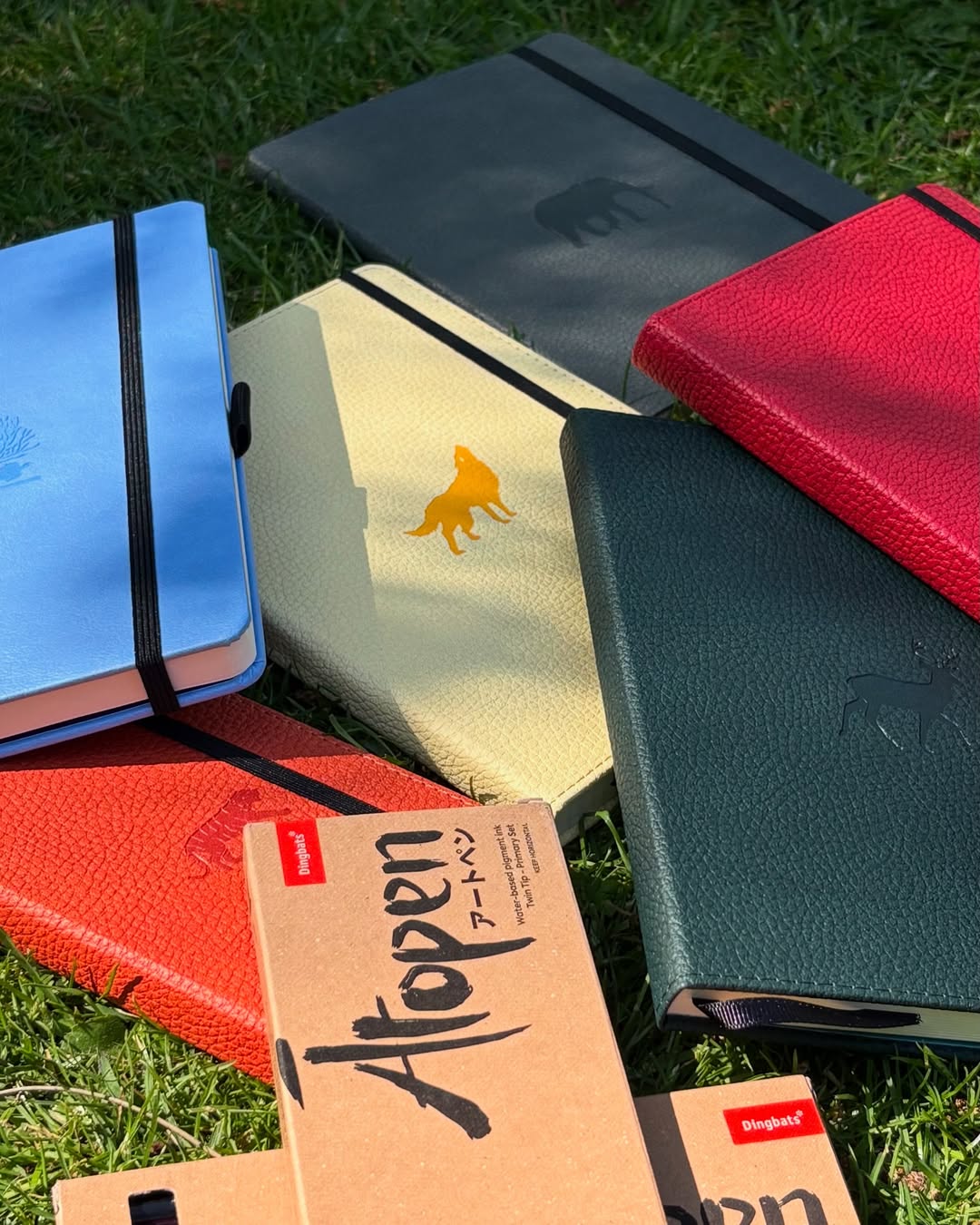
At Dingbats*, we believe notebooks are made for real life, not only perfect pages. The Wildlife Collection, Earth Collection, and Pro Collection are all designed to be used, carried, filled, returned to, and kept. A notebook becomes personal because of what happens inside it.
The unplanned pages are often the ones that tell the truth.
Quick Overview: Why Unplanned Notebook Pages Matter
| Page Type | Why It Can Become Valuable |
|---|---|
| Messy notes | Show thinking in progress |
| Crossed-out lists | Reveal what changed |
| Tickets and receipts | Anchor memories to real places and dates |
| Random sketches | Capture ideas before they become clear |
| Rushed handwriting | Preserves urgency, mood, and moment |
| Half-finished plans | Show life before it became organized |
| Marginal notes | Reveal side thoughts and connections |
| Ordinary lists | Preserve the texture of daily life |
| Unfinished pages | Show what was happening beneath the surface |
The value of a notebook is not always in how well it was planned. Sometimes it is in what the pages accidentally preserved.
Why We Try to Plan the Perfect Notebook
A new notebook can feel full of pressure.
The cover is clean.
The pages are untouched.
The first page feels important.
The notebook still holds every possible version of itself.
So we try to plan it.
We decide what it should become before it has had time to become anything. A journal. A work notebook. A travel log. A planner. A project book. A place for perfect thoughts, written neatly and consistently.
Planning can be useful. But too much planning can make a notebook harder to use. When every page has to fit the original idea, the notebook becomes less flexible. You may avoid writing down something messy because it does not belong. You may skip the thought because it ruins the layout. You may wait for the right system, the right pen, the right mood, or the right beginning. The problem is that real life rarely arrives in the right format.
Why Perfect Notebook Planning Can Hold You Back
| Pressure | What It Does |
|---|---|
| Perfect first page | Makes starting feel harder |
| Strict sections | Leaves no room for unexpected thoughts |
| Beautiful layouts only | Turns the notebook into performance |
| One purpose only | Prevents the notebook from reflecting real life |
| Fear of mistakes | Stops ideas before they reach the page |
| Too much structure | Makes writing feel like maintenance |
| Waiting for the right moment | Keeps the notebook blank |
A notebook should have enough structure to help you use it. But enough freedom to let life in.

The Pages You Do Not Plan Are the Pages That Surprise You
The most interesting pages often happen when the notebook is simply nearby.
You are in a meeting and write down a sentence someone says.
You are on a trip and tape in a ticket.
You are reading and copy one line.
You are walking and stop to write an idea.
You are planning your day and realize what you are really worried about.
You are sketching something badly and suddenly see the better direction.
These pages happen because the notebook is available, not because the layout was perfect. They are valuable because they catch life as it moves.
Unplanned Pages Often Capture
| Moment | What the Page Preserves |
|---|---|
| A sudden idea | The beginning of something |
| A changed plan | Evidence of real life |
| A conversation | Someone’s words or mood |
| A ticket or receipt | A place, date, person, or memory |
| A mistake | How the thought developed |
| A sketch | A visual idea before it was polished |
| A rushed list | What the day actually required |
| A reflection | What you understood only in the moment |
The page did not need to be planned. It needed to be ready.
Why Messy Pages Become More Meaningful Over Time
Messy pages can feel disappointing when they happen.
The handwriting is uneven.
The list is unfinished.
The layout is awkward.
The idea is unclear.
The page does not match the rest of the notebook.
But later, these pages often become the most interesting ones. A neat page can show what you wanted the notebook to look like. A messy page can show what was actually happening. That difference matters.
What Messy Pages Can Reveal
| Messy Detail | What It Shows |
|---|---|
| Crossed-out words | Revision, uncertainty, and change |
| Arrows | Connections forming in real time |
| Uneven handwriting | Speed, urgency, or emotion |
| Half-finished lists | Life interrupted |
| Doodles | Thinking without pressure |
| Random notes | What caught your attention |
| Repeated phrases | What your mind kept returning to |
| Page gaps | What stayed unresolved |
Mess is not always failure. Sometimes it is evidence that the notebook was alive.
The Beauty of a Page That Was Actually Used
A used page has a different kind of beauty. Not polished beauty. Human beauty.
The kind that comes from pressure marks, underlines, coffee stains, folded corners, taped scraps, crossed-out sentences, and notes written too quickly because the thought might disappear.
A notebook becomes more beautiful through use because use gives it history.
Signs of a Used Notebook
| Sign | Why It Matters |
|---|---|
| Softened cover | The notebook was carried |
| Bent corners | The pages moved through life |
| Ink variation | Different days, pens, and moods |
| Taped scraps | Memories were added physically |
| Cross-outs | Thoughts changed on the page |
| Repeated pages | The notebook was returned to |
| Full pocket | Loose pieces of life were saved |
| Finished pages | The notebook became a record |
A perfect notebook may be nice to look at. A used notebook is harder to replace.
Why Ordinary Pages Become Priceless Later
Ordinary pages are easy to undervalue.
A to-do list.
A meal plan.
A shopping list.
A meeting note.
A packing list.
A page of errands.
A quick reminder.
These pages seem disposable because they are practical. But later, practical pages can become memory pages.
A grocery list can remind you where you lived.
A packing list can bring back a trip.
A meeting note can reveal the beginning of a project.
A weekly plan can show the rhythm of a life you no longer live.
A list of errands can become evidence of an ordinary day that now feels far away.
Ordinary Pages That Become Meaningful
| Page | What It Might Remember Later |
|---|---|
| Grocery list | Routine, place, household, season |
| Packing list | A trip before it began |
| Meeting notes | Decisions, projects, people |
| Weekly plan | The rhythm of daily life |
| Errand list | Ordinary responsibilities |
| Budget notes | Priorities and pressure |
| Meal notes | Taste, place, people |
| Appointment list | What life required at the time |
Ordinary pages matter because ordinary life matters. You may not know which details will feel precious later. That is why writing them down is enough.

The Page With the Coffee Stain
A coffee stain can feel like a ruined page. Until later. Then it becomes part of the memory.
Where were you?
What were you writing?
Who were you with?
Was it a rushed morning?
A long work session?
A travel day?
A cafe you loved?
A meeting that mattered?
A quiet moment before everything changed?
A stain can become a timestamp. Not exact, but emotional. It reminds you that the notebook was not separate from life. It was there while life was happening.
Small Marks That Add Memory
| Mark | What It Can Hold |
|---|---|
| Coffee stain | A place, morning, desk, or routine |
| Ink smudge | Speed, hand movement, imperfection |
| Folded corner | A page you returned to |
| Tape mark | Something once attached |
| Pressed leaf shadow | A walk, season, or place |
| Water mark | Weather, travel, accident |
| Torn edge | Use, movement, handling |
| Pen test | A tool, mood, or moment |
These marks are not always mistakes. Sometimes they are proof.
The Page You Almost Tore Out
Some pages feel wrong at first.
The idea did not work.
The handwriting was bad.
The layout failed.
The list became irrelevant.
The sketch looked awkward.
The plan changed immediately.
You may want to tear them out. But sometimes the page you almost remove becomes important later because it shows the process. It shows where the idea began before it improved. It shows the false start. It shows the rough draft. It shows what you tried before you knew what worked.
Why Failed Pages Are Worth Keeping
| Failed Page | Why It Can Matter |
|---|---|
| Bad sketch | Shows the first version of an idea |
| Wrong plan | Reveals how life changed |
| Crossed-out draft | Preserves revision |
| Awkward layout | Shows experimentation |
| Abandoned list | Captures a moment that passed |
| Messy notes | Holds raw thinking |
| Repeated attempt | Shows persistence |
| Mistake | Teaches what not to repeat |
A notebook does not need every page to succeed. It needs room for attempts.
The Page That Started as Nothing
Some pages begin with no clear purpose.
A word in the corner.
A line.
A shape.
A date.
A half-thought.
A random list.
A title without an article.
A sketch without a subject.
Then something grows. The page becomes a plan, a poem, a project, a memory, a decision, a map, a moodboard, or a question that stays with you. This is why notebooks need open space. Not every page should be assigned in advance.
Unplanned Beginnings That Can Become Useful
| Beginning | What It Might Become |
|---|---|
| A word | A title, theme, or memory |
| A quote | A reflection or article idea |
| A sketch | A design direction |
| A list | A plan or archive |
| A question | A project or essay |
| A date | A memory page |
| A color | A moodboard |
| A random note | A useful connection later |
A notebook gives small beginnings somewhere to become larger.
The Page That Only Makes Sense to You
Some notebook pages are private in a way that cannot be explained.
A symbol.
A phrase.
A nickname.
A number.
A place.
A short line that carries a whole story.
A tiny drawing that would mean nothing to anyone else.
These pages may not be understandable to a stranger, but they are meaningful because they belong to your inner world. Not every valuable page needs to be clear to everyone. Some pages are valuable because they hold personal context.
Private Page Details
| Detail | Why It Matters |
|---|---|
| Inside joke | Preserves a relationship |
| Nickname | Holds a person or memory |
| Small symbol | Represents a private meaning |
| One-word note | Captures a feeling only you understand |
| Repeated phrase | Holds a personal pattern |
| Initials | Connects to someone without explaining |
| Place name | Brings back a whole memory |
| Personal shorthand | Shows how your mind organizes life |
A notebook is allowed to be private. That is part of its power.

Why Blank Space Matters
Not every page needs to be full.
Blank space can be meaningful too.
It can show where you stopped.
Where you needed more time.
Where the idea was unfinished.
Where the thought was too big.
Where life interrupted the page.
Where you left room to return.
A notebook does not need to be dense to be valuable. Sometimes the space around a note helps you see what mattered.
Why Blank Space Can Be Useful
| Blank Space Does This | Why It Helps |
|---|---|
| Gives thoughts room | The page feels less crowded |
| Allows return | You can add more later |
| Marks hesitation | Shows the thought was unfinished |
| Highlights a line | Makes one idea stand out |
| Creates pause | Helps the page breathe |
| Supports sketches | Leaves space for visual thinking |
| Reduces pressure | Not every page has to be filled |
A page does not need to be maximized. It needs to hold the thought well.
Why the Best Notebook Pages Are Often Mixed
Real life does not stay in categories.
A work note can sit beside a personal reminder.
A grocery list can share a page with a book quote.
A travel plan can include a sketch.
A meeting note can lead to a new idea.
A journal entry can become a to-do list.
A doodle can become a design.
Mixed pages can feel untidy, but they often reflect how thinking actually works.
Mixed Pages Can Include
| Combination | Why It Works |
|---|---|
| List + reflection | Practical life meets meaning |
| Sketch + notes | Visual and verbal thinking together |
| Ticket + memory | Object and story in one place |
| Plan + emotion | What happened and how it felt |
| Quote + response | Someone else’s words and your thought |
| Task + idea | Work and creativity overlap |
| Map + travel note | Movement and memory together |
A notebook becomes personal when it stops pretending life is perfectly separated.
The Notebook as a Place for Accidents
Accidents can make a notebook more interesting.
The line that went in the wrong place.
The page that became something else.
The note written upside down.
The sticker placed badly.
The ink that bled slightly because you pressed too hard.
The pocket filled with things you forgot were there.
These accidents remind you that the notebook was used in real time.
Notebook Accidents That Can Become Meaningful
| Accident | What It Can Add |
|---|---|
| Smudge | Movement and urgency |
| Wrong page | Unexpected connection |
| Crooked tape | Human imperfection |
| Ink change | Different day or mood |
| Ripped edge | Handling and use |
| Loose scrap | Surprise memory |
| Crossed-out title | Evolution of an idea |
| Unfinished spread | Life interrupted |
Perfection makes a notebook look controlled. Accidents make it feel lived in.

The Wildlife Collection: For Personal, Unplanned Pages
The Dingbats* Wildlife Collection is well suited to unplanned notebook pages because it feels personal, expressive, and easy to use for everyday writing.
Its animal-inspired covers give each notebook character, while the 100gsm cream paper supports journaling, notes, lists, travel writing, reflections, and personal fragments.
Use Wildlife when you want a notebook that can move through life with you.
Use Wildlife For
| Unplanned Page Type | Why It Works |
|---|---|
| Daily notes | Captures thoughts as they happen |
| Personal reflections | Gives private writing a warm place |
| Travel scraps | Holds movement, place, and memory |
| Conversation notes | Saves words before they disappear |
| Letters and drafts | Supports emotional writing |
| Ordinary lists | Makes daily life part of the record |
| Personal lore | Holds the small details that feel like you |
Wildlife is for the pages that become meaningful because they are personal.
The Earth Collection: For Plans That Change
The Dingbats* Earth Collection is useful for the planned and unplanned parts of life.
Planning pages are rarely static. Goals shift. Priorities move. Habits change. Projects evolve. What you thought mattered in January may look different by June.
That is not failure. That is life showing up on paper.
Use Earth For
| Page Type | Why It Works |
|---|---|
| Monthly reviews | Shows what changed |
| Habit trackers | Reveals patterns over time |
| Project notes | Records decisions and pivots |
| Goal pages | Captures intention and progress |
| Indexes | Helps find important pages later |
| Future logs | Shows plans before life edits them |
| Collections | Groups ideas, memories, lists, and references |
Earth is for people who like structure, but still need room for change. A plan that changes is still worth recording.
The Pro Collection: For Creative Accidents
The Dingbats* Pro Collection is made for the kind of pages that evolve while you are making them.
A sketch becomes a layout.
A color test becomes a palette.
A brush pen title becomes a moodboard.
A diagram becomes a project plan.
A mistake becomes a direction.
Use Pro For
| Creative Page Type | Why It Works |
|---|---|
| Sketches | Captures ideas visually |
| Moodboards | Turns fragments into direction |
| Color tests | Preserves creative choices |
| Visual notes | Combines words, arrows, and shapes |
| Diagrams | Makes complex ideas visible |
| Collage | Gives scraps and paper pieces a role |
| Creative drafts | Lets ideas develop before they are final |
Pro is for pages that need space to become something unexpected.

Why the Pocket Matters
The pocket in a notebook is one of the best places for unplanned value.You may place something there quickly without thinking much about it.
A receipt.
A ticket.
A note.
A postcard.
A business card.
A small paper scrap.
A label.
A printed photo.
A pressed leaf.
Later, you open the pocket and find memory waiting.
Things Worth Keeping in the Pocket
| Item | What It Might Become |
|---|---|
| Receipt | A meal, place, conversation, or day |
| Ticket | A journey, event, or milestone |
| Postcard | A place or person |
| Business card | A meeting or opportunity |
| Handwritten note | Someone’s voice or care |
| Photo | A moment with context |
| Pressed flower | A walk, season, or place |
| Label or tag | An object tied to a memory |
| Scrap of paper | A detail that would have disappeared |
The pocket is practical. But over time, it can become emotional.
How to Let a Notebook Become Valuable Naturally
You cannot force a notebook to become meaningful. You can only use it enough that meaning has a chance to collect. The value builds slowly through dates, notes, lists, mistakes, objects, sketches, and thoughts. The more a notebook moves with you, the more it becomes attached to a phase of life.
Ways to Let Value Build
| Habit | Why It Helps |
|---|---|
| Date pages | Gives context later |
| Write small things | Ordinary details become memory |
| Keep scraps | Physical objects anchor moments |
| Use the pocket | Save things before deciding |
| Allow mistakes | Process matters |
| Mix page types | Reflects real life |
| Review old pages | Helps value become visible |
| Finish the notebook | Turns it into a complete record |
The goal is not to create valuable pages. The goal is to use the notebook honestly. The value arrives later.
What to Write When You Do Not Know What to Write
When you feel stuck, do not try to write something important. Write something specific.
The date.
The weather.
Where you are.
What is on your desk.
What you need to remember.
What changed today.
What you keep thinking about.
What you almost forgot.
Specific details are easier than profound thoughts. And often, they age better.
Simple Prompts for Unplanned Pages
| Prompt | What to Write |
|---|---|
| Right now, I am… | A snapshot of the moment |
| Today I need to remember… | Tasks, ideas, details |
| One thing that changed… | A shift, decision, or feeling |
| I keep thinking about… | Repeated thoughts |
| This page started because… | Why you opened the notebook |
| A small detail from today… | Something ordinary but specific |
| I almost forgot… | The thought that needed catching |
| This might matter later because… | Why the note is worth keeping |
A page does not need a big idea. It needs a beginning.
A Page for the Unplanned
Create one page in your notebook titled:
Things I Did Not Plan to Write Down
Use it for anything that does not fit elsewhere.
Unplanned Page Template
| Prompt | Your Notes |
|---|---|
| Date | |
| What happened? | |
| What did I notice? | |
| What did I save? | |
| What changed? | |
| What did I almost forget? | |
| Why might this matter later? |
This page can hold life without needing to classify it. Sometimes the best notes are the ones that do not belong anywhere else yet.
A Page for Objects Found in the Pocket
When you find something in the back pocket of your notebook, give it a page.
Pocket Object Template
| Prompt | Your Notes |
|---|---|
| Object | |
| Date found | |
| Where it came from | |
| Who or what it reminds me of | |
| Why I kept it | |
| What I want to remember |
A loose object becomes more meaningful when it has context. The object holds the trace. The page holds the story.
A Page for Plans That Changed
Changed plans can feel frustrating, but they are often worth recording. They show how life moved.
Changed Plan Template
| Prompt | Your Notes |
|---|---|
| Original plan | |
| What changed | |
| Why it changed | |
| What happened instead | |
| What I learned | |
| What I want to remember |
This is especially useful for travel, work projects, goals, routines, and personal decisions. A changed plan is still a story.
A Page for the Messiest Note
Find one messy page in your notebook and write beside it:
What this page was really about
Then answer:
| Prompt | Your Notes |
|---|---|
| What was happening when I wrote this? | |
| Why was it messy? | |
| What was I trying to figure out? | |
| What changed after this page? | |
| Why is it worth keeping? |
This helps turn a page you might dislike into part of the notebook’s story. Sometimes the mess only makes sense later.
How to Finish a Notebook Without Judging It
When you finish a notebook, it is tempting to judge it.
Was it neat enough?
Did I use it consistently?
Did I waste pages?
Did I follow the system?
Did I make it look good?
A better question is:
What did this notebook hold that would have been lost otherwise?
That question changes everything.
Finished Notebook Reflection
| Prompt | Your Notes |
|---|---|
| Date started | |
| Date finished | |
| What phase of life did this notebook hold? | |
| What pages surprised me? | |
| What page feels most valuable now? | |
| What did I not plan to capture? | |
| What objects or scraps did I save? | |
| What changed while I used this notebook? | |
| What do I want to carry into the next one? |
A finished notebook does not need to be perfect to be meaningful. It only needs to have been used.
How to Stop Saving Your Notebook for “Better” Thoughts
Many people save beautiful notebooks for better thoughts.
Better handwriting.
Better ideas.
Better routines.
Better plans.
Better versions of themselves.
But the best notebook is not the one saved for a future self. It is the one used by the current one. Your current thoughts are enough to begin with. Your current lists count. Your current questions matter. Your current season of life is worth recording before it changes.
Use the Notebook Now For
| Use | Why It Counts |
|---|---|
| A basic list | It shows daily life |
| A rough idea | It may grow later |
| A memory | It will fade without context |
| A sketch | It captures visual thinking |
| A question | It keeps curiosity alive |
| A receipt | It anchors a place and date |
| A plan | Even if it changes |
| A reflection | Even if it is unfinished |
Do not wait for the notebook to deserve your best thoughts. Use it so your thoughts have somewhere to become better.
Frequently Asked Questions
Why are messy notebook pages valuable?
Messy notebook pages are valuable because they show real thinking in progress. Cross-outs, arrows, rushed handwriting, sketches, and unfinished notes can reveal how ideas, plans, and memories developed.
What should I do with pages I do not like in my notebook?
You can keep them, cover them, turn them into a collage, add notes around them, or use them as evidence of process. Not every page needs to be beautiful to be meaningful.
How do I make a notebook feel more personal?
Date your pages, write specific details, save small scraps, use the pocket, include names and places, and allow imperfect pages. A notebook becomes personal through use.
Are unplanned notebook pages worth keeping?
Yes. Unplanned pages often become meaningful because they capture real moments, unexpected ideas, changed plans, and ordinary details that may matter later.
What can I put in the pocket of a notebook?
You can keep tickets, receipts, notes, postcards, business cards, labels, pressed flowers, photos, and other small paper objects that connect to a memory or idea.
Which Dingbats* notebook is best for everyday unplanned notes?
The Wildlife Collection is ideal for personal and everyday notes, the Earth Collection works well for structured plans that may change, and the Pro Collection is best for creative pages, sketches, visual notes, and mixed media ideas.

Leave a comment
This site is protected by hCaptcha and the hCaptcha Privacy Policy and Terms of Service apply.