

Last updated: July 2026 | A practical guide to lay-flat notebooks, notebook binding, writing comfort, journaling, planning, work notes, sketching, and Dingbats* notebooks
A notebook should not fight you while you write. It should not keep closing halfway through a sentence. It should not make you press one side down with your hand. It should not make the middle of the page hard to reach. It should not interrupt your thoughts because the spine will not stay open.
That is why lay-flat notebooks matter. A lay-flat notebook is designed to stay open more easily while you write, so both pages are comfortable to use. It is a simple feature, but it can change the whole writing experience. Whether you are journaling, planning, sketching, taking meeting notes, making lists, or filling out a guided journal, a notebook that lays flat makes the page feel more accessible.
At Dingbats*, lay-flat design is part of making notebooks practical for real life. A beautiful notebook should not only look good on a desk. It should feel good while you are using it. The Wildlife Collection is ideal for everyday writing, journaling, work notes, and flexible use. The Earth Collection works beautifully for structured planning, trackers, routines, goals, and page spreads. The Pro Collection gives creatives space for sketches, moodboards, visual notes, and mixed media.
A lay-flat notebook helps the notebook disappear into the background. So you can focus on the writing.
Quick Overview: What Is a Lay-Flat Notebook?
| Feature | What It Means |
|---|---|
| Lay-flat notebook | A notebook designed to stay open more easily while writing |
| Main benefit | More comfortable writing across both pages |
| Best for | Journaling, planning, work notes, sketching, studying, guided journals |
| Helpful for | Long writing sessions, left-handed writers, open spreads, visual layouts |
| Dingbats* fit | Wildlife, Earth, Pro, and Guided Journals |
| Why it matters | Less pressure on the spine, easier page access, smoother writing flow |
A lay-flat notebook is not only a design detail. It is a comfort feature.
What Is a Lay-Flat Notebook?
A lay-flat notebook is a notebook that opens and stays flatter on the desk than a standard notebook. Instead of constantly springing shut or forcing you to hold the pages down, a lay-flat notebook allows the spread to stay open more naturally. This makes writing easier, especially near the center of the notebook.
If you have ever tried to write on the left page of a stiff notebook while the right side keeps lifting, you already know why this matters. A notebook that lays flat helps you use the full page.
Not just the outer edge. Not just the easy side. Not just the first half of the notebook. The full spread becomes usable.
A Lay-Flat Notebook Helps With
| Writing Situation | Why It Helps |
|---|---|
| Journaling | Easier long-form writing |
| Planning | Weekly and monthly spreads stay open |
| Work notes | Easier to write during meetings |
| Studying | Notes are easier to review |
| Sketching | More room for visual layouts |
| Left-handed writing | Less awkward page positioning |
| Guided journals | Easier to fill structured prompts |
| Travel notes | Less page resistance when writing on the go |
A lay-flat notebook simply makes the act of writing feel smoother.

Why Some Notebooks Do Not Stay Open
Not all notebooks are designed to open comfortably. Some bindings are too stiff. Some covers resist movement. Some spines do not relax with use. Some notebooks look good when closed but become frustrating once you start writing inside them.
A notebook that does not stay open can make writing feel awkward. You may find yourself pressing the page down with one hand, avoiding the center of the spread, or writing at an uncomfortable angle. Over time, that small frustration can make you use the notebook less. This is why Dingbats* decided to have their notebooks thread bound to prevent such frustration, hence having all notebooks lay completely flat.
Common Problems with Stiff Notebooks
| Problem | What It Feels Like |
|---|---|
| Pages keep closing | You have to hold the notebook open |
| Spine feels stiff | Writing near the center is difficult |
| Left page lifts | The page moves while you write |
| Center margin is hard to use | Words become cramped near the spine |
| Notebook feels uncomfortable | Longer writing sessions become annoying |
| Spread will not stay open | Planning or sketching feels harder |
A notebook should invite you to keep writing. If the binding keeps interrupting you, the notebook is not doing its job.
Why Lay-Flat Binding Matters for Everyday Writing
Most people do not think about binding until it becomes annoying. But binding affects how a notebook feels every time you use it.
A lay-flat notebook, like any Dingbats* Notebook, supports everyday writing because it reduces friction. You can open the page, start writing, and stay focused. You do not need to keep adjusting the notebook, flattening the spine, or shifting your hand around an awkward curve.
Why Lay-Flat Notebooks Feel Better
| Benefit | Why It Matters |
|---|---|
| Easier writing | Both pages are more comfortable to use |
| Less hand pressure | You do not need to hold the notebook open |
| Better page access | The center of the spread is easier to reach |
| Cleaner layouts | Planning and notes can spread across two pages |
| More natural flow | Less interruption while writing |
| Better for longer sessions | Journaling and work notes feel less tiring |
A lay-flat notebook is especially helpful if you write often. The more you use a notebook, the more these small comfort details matter.
Lay-Flat Notebooks for Journaling
Journaling often involves longer writing sessions. You may sit with your notebook for ten minutes, thirty minutes, or longer. You might write morning pages, reflections, gratitude lists, travel memories, personal notes, or thoughts you want to return to later.
If the notebook keeps closing, journaling becomes less calm. A lay-flat notebook makes the page feel open and available.
Why Lay-Flat Helps Journaling
| Journaling Need | How Lay-Flat Helps |
|---|---|
| Long entries | Keeps the notebook open comfortably |
| Writing across spreads | Lets thoughts continue naturally |
| Reflection pages | Makes prompts easier to answer |
| Daily journaling | Reduces small frustrations |
| Memory keeping | Easier to add notes, photos, or keepsakes |
| Private writing | Helps the notebook feel more inviting |
The Dingbats* Wildlife Collection is a strong choice for journaling because it offers a flexible writing experience with smooth paper, durable covers, and a format that supports everyday use.
A journal should feel like a place you want to return to. Lay-flat design helps make that happen.

Lay-Flat Notebooks for Planning
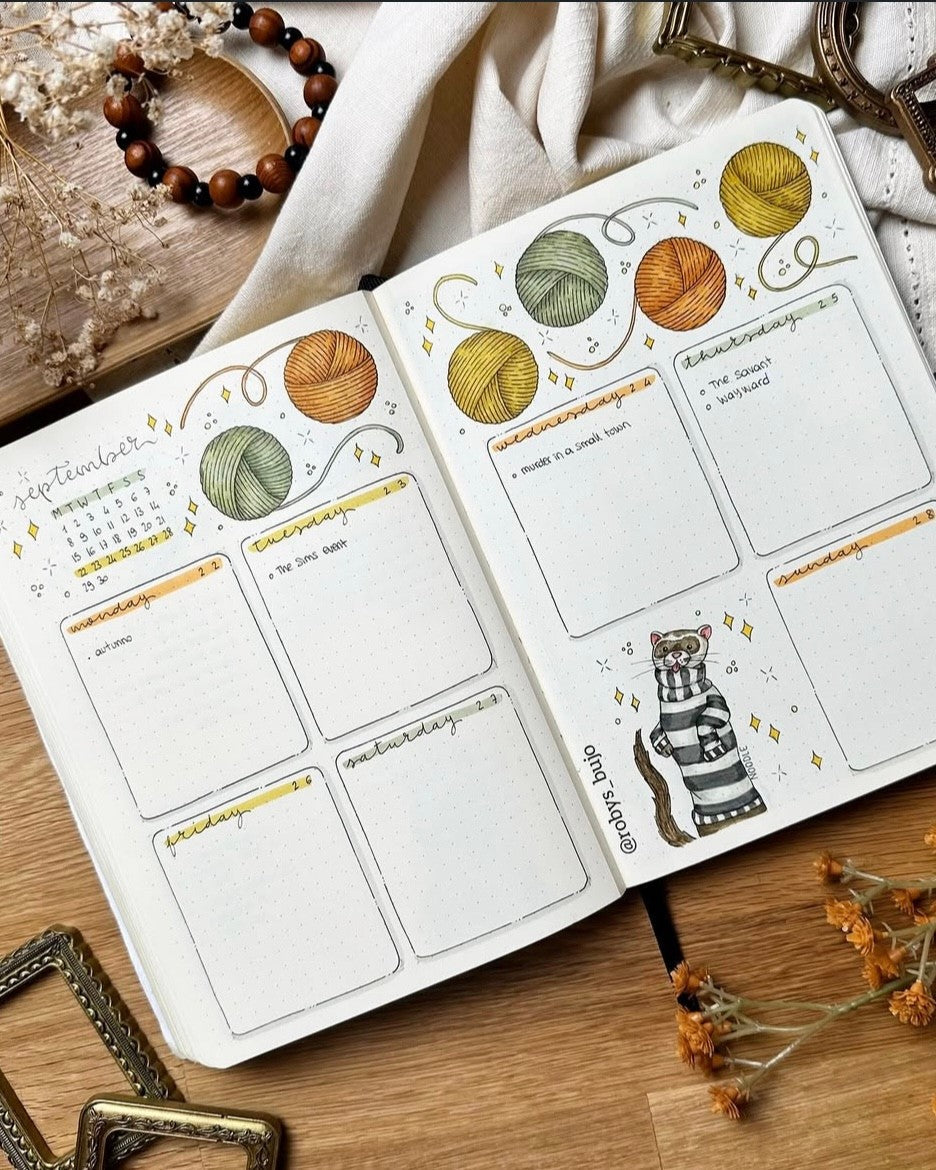
Planning often needs a full spread.
A weekly layout.
A monthly overview.
A habit tracker.
A project timeline.
A goal map.
A routine page.
A list on one side and notes on the other.
If the notebook does not stay open, planning becomes harder than it needs to be.
The Dingbats* lay-flat notebooks let you see the whole spread at once, which is especially useful when your notes, tasks, and plans need to connect across pages.
Planning Pages That Benefit from Lay-Flat Design
| Planning Page | Why Lay-Flat Helps |
|---|---|
| Weekly spread | Lets the full week stay visible |
| Monthly overview | Easier to map dates and deadlines |
| Habit tracker | Keeps the whole tracker open |
| Goal page | Lets you connect goals and actions |
| Project timeline | Gives space across two pages |
| Routine page | Keeps recurring steps visible |
| Task list | Easier to review while working |
The Dingbats* Earth Collection is especially useful for structured planning because it supports goals, routines, trackers, lists, and organized pages. Lay-flat design makes those pages easier to use.
Lay-Flat Notebooks for Work Notes
Work notes need speed and clarity. In a meeting, you do not want to fight with the spine of your notebook. You want to open the page and capture what matters: key points, decisions, action items, follow-ups, deadlines, names, ideas, and questions.
A lay-flat notebook helps because it stays open while your attention stays on the conversation.
Why Lay-Flat Helps at Work
| Work Situation | Why It Helps |
|---|---|
| Meeting notes | Easier to write quickly |
| Client calls | Keeps the page open while listening |
| Project planning | Lets you map tasks across a spread |
| Follow-up lists | Keeps action items visible |
| Brainstorms | Gives space for ideas and arrows |
| Weekly reviews | Makes pages easier to compare |
For work notes, the Wildlife Collection is ideal for flexible note-taking, while the Earth Collection is better for structured action items, project pages, and recurring systems.
A notebook that stays open helps you stay present.
Lay-Flat Notebooks for Creative Work
Creative work often needs space. A single page is not always enough for sketches, mind maps, layouts, concepts, moodboards, thumbnails, visual notes, or early ideas. A lay-flat notebook makes it easier to use the full spread as a creative surface.
This matters for designers, artists, writers, marketers, students, planners, and anyone who thinks visually.
Creative Uses for Lay-Flat Notebooks
| Creative Page | Why Lay-Flat Helps |
|---|---|
| Moodboard | Keeps references visible |
| Mind map | Lets ideas spread naturally |
| Sketch layout | Gives room across two pages |
| Campaign concept | Helps connect words and visuals |
| Visual notes | Makes diagrams easier |
| Color tests | Keeps page stable |
| Storyboarding | Helps sequence ideas |
The Dingbats* Pro Collection is ideal for creative work because its 160gsm mixed media paper supports sketching, brush pens, markers, calligraphy, visual notes, light washes, and layered thinking. A creative notebook should give ideas space to move.

Why Lay-Flat Notebooks Are Helpful for Left-Handed Writers
Left-handed writers often experience the page differently.
The hand may move across fresh ink. The wrist may need more room. The spine can get in the way, especially when writing on one side of the notebook.
A lay-flat notebook can make writing more comfortable because the page stays open and gives the hand more access to the writing surface.
Lay-Flat Benefits for Left-Handed Writers
| Challenge | How Lay-Flat Helps |
|---|---|
| Writing near the spine | Easier access to the center |
| Page lifting | Less need to hold the notebook down |
| Wrist angle | More room to adjust position |
| Smudging risk | Easier to angle the notebook comfortably |
| Long writing sessions | Less strain from fighting the page |
Lay-flat design will not solve every left-handed writing challenge, but it can make the writing setup feel much easier. The notebook should work with your hand, not against it.
Lay-Flat vs Spiral Notebooks
Lay-flat notebooks and spiral notebooks both make writing easier, but they feel different. A spiral notebook often folds back on itself, which can be useful for tight spaces or one-page writing. A lay-flat bound notebook keeps a more classic notebook feel while still opening comfortably across a spread.
Lay-Flat Notebook vs Spiral Notebook
| Feature | Lay-Flat Bound Notebook | Spiral Notebook |
|---|---|---|
| Feel | Classic, polished notebook feel | Functional and flexible |
| Spread use | Good for two-page layouts | Good for one-page or folded-back use |
| Desk appearance | More premium | More casual |
| Best for | Journaling, planning, work notes, creative spreads | Classes, guided journals, memory books |
| Writing comfort | Comfortable open spread | Easy page turning |
| Dingbats* example | Wildlife, Earth, Pro | Baby Memory and Wedding Anniversary Journals |
Neither format is automatically better. It depends on how you use the notebook. If you want a classic notebook that stays open more easily, choose lay-flat. If you want pages that turn and fold easily, spiral can be helpful.
Does Lay-Flat Mean the Notebook Is Better?
Lay-flat design is an important feature, but it is not the only thing that makes a notebook good.
A great notebook should also have quality paper, durable construction, a useful size, a cover that fits your lifestyle, and a ruling that suits the way you write. This is the perfect moment to check out Dingbats* Notebooks!
What to Consider Beyond Lay-Flat Design
| Feature | Why It Matters |
|---|---|
| Paper quality | Affects writing comfort and pen performance |
| Cover type | Changes durability and portability |
| Size | Affects how and where you use the notebook |
| Ruling | Helps with writing, planning, drawing, or structure |
| Binding | Affects how the notebook opens |
| Durability | Helps the notebook last |
| Purpose | Journaling, work, planning, sketching, or memory keeping |
Lay-flat design matters because it improves usability. But the best notebook is the one where all features work together.
How to Choose a Lay-Flat Notebook
Before choosing a notebook, think about how you will actually use it.
Questions to Ask
| Question | Why It Matters |
|---|---|
| Will I write long entries? | Choose a comfortable journal-style notebook |
| Will I use two-page spreads? | Lay-flat design is especially useful |
| Will I carry it every day? | Consider size and cover type |
| Will I use markers or brush pens? | Choose heavier paper |
| Will I plan routines or trackers? | Choose structured pages or dotted ruling |
| Will I use it at work? | Choose something polished and durable |
| Will I sketch? | Choose paper that supports visual work |
Do not choose a notebook only because it looks good closed. Choose one that feels good open. That is where the real use happens.
Dingbats* Lay-Flat Notebook Guide
Different Dingbats* notebooks support different writing styles.
- Wildlife Collection: Journaling, work notes, travel notes, everyday writing
- Earth Collection: Planning, goals, routines, trackers, structured notes
- Pro Collection: Sketching, moodboards, visual notes, mixed media
Lay-Flat Notebook Uses
A lay-flat notebook can support many different routines.
Ideas for Using a Lay-Flat Notebook
| Use | Page Idea |
|---|---|
| Journaling | Daily reflection spread |
| Planning | Weekly layout |
| Work notes | Meeting notes and action items |
| Creative work | Moodboard or sketch spread |
| Reading | Book review and quote page |
| Travel | Itinerary and memory page |
| Study | Notes and summary page |
| Home planning | Project list and tracker |
| Goal setting | Vision page and next steps |
| Memory keeping | Photos and written reflections |
The best thing about a lay-flat notebook is that it gives the page room to function. You can write, plan, draw, reflect, and review without constantly adjusting the notebook.
Common Lay-Flat Notebook Questions
Does a lay-flat notebook stay completely flat?
Some lay-flat notebooks stay flatter than others depending on binding, cover, paper weight, and how far into the notebook you are. The goal is not always a perfectly flat surface, but a notebook that stays open comfortably enough to write.
Are lay-flat notebooks good for journaling?
Yes. Lay-flat notebooks are excellent for journaling because they make long writing sessions more comfortable and help both pages stay usable.
Are lay-flat notebooks good for planning?
Yes. Planning often uses two-page spreads, trackers, weekly layouts, monthly pages, and lists. A lay-flat notebook makes those spreads easier to see and use.
Are lay-flat notebooks better for left-handed writers?
They can be helpful because they give the hand easier access to the page and reduce the need to hold the notebook open. This can make writing feel more comfortable.
What is the difference between lay-flat and spiral notebooks?
A lay-flat bound notebook gives a classic notebook feel while opening more comfortably. A spiral notebook uses a coil binding, which often allows pages to turn easily or fold back on themselves.
What is the best Dingbats* notebook for writing?
The Wildlife Collection is ideal for flexible everyday writing and journaling. The Earth Collection is best for structured planning and trackers. The Pro Collection is best for creative writing, sketching, and visual notes.

Leave a comment
This site is protected by hCaptcha and the hCaptcha Privacy Policy and Terms of Service apply.