

Last updated: September 2026 | A guide to famous notebooks, creative thinking, observation, idea capture, memory, and Dingbats* notebooks
Big ideas rarely arrive fully formed. They usually begin smaller.
A question.
A sketch.
A list.
A strange observation.
A problem that will not leave you alone.
A line copied from a book.
A rough diagram.
A sentence crossed out and rewritten.
A page that makes no sense to anyone except the person who wrote it.
This is why so many great thinkers kept notebooks. Not because they already had finished ideas. Because they needed somewhere to put unfinished ones.
Leonardo da Vinci filled notebooks with drawings, inventions, anatomy studies, questions, observations, and fragments of thought. Charles Darwin used notebooks to develop ideas about nature, species, and change. Marie Curie’s notebooks became part of the physical record of scientific discovery. Writers, artists, scientists, designers, explorers, and inventors have long used notebooks as working spaces for thinking before the world saw the polished result.
The notebook is where the idea is still alive.
Messy.
Uncertain.
Private.
Growing.
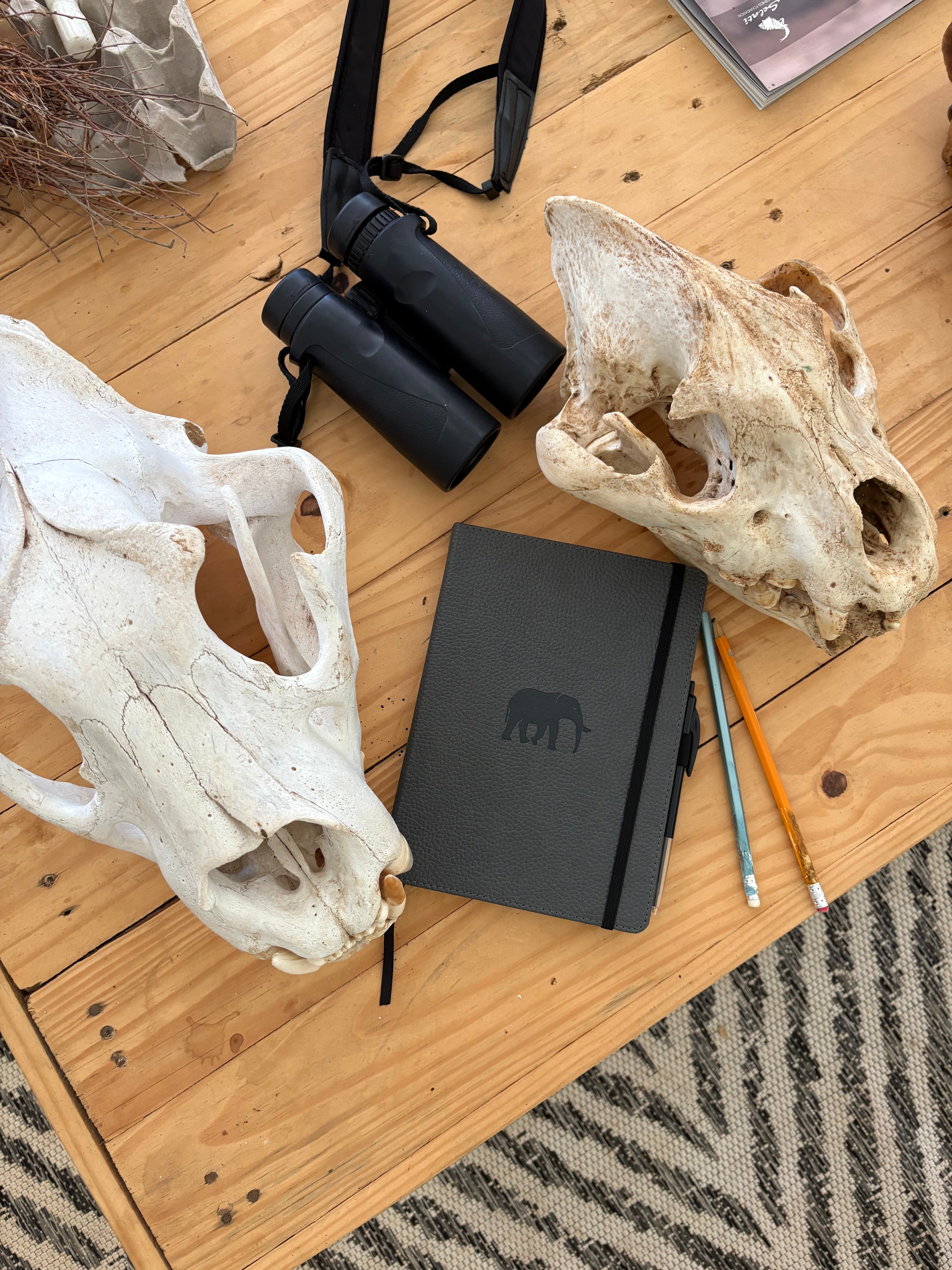
At Dingbats*, we believe notebooks matter because they give ideas somewhere to begin. Whether you use the Wildlife Collection for everyday observations, the Earth Collection for structured notes and systems, or the Pro Collection for sketches, diagrams, visual thinking, and creative exploration, the page becomes more than paper.
It becomes a place where thought can develop. Great thinkers did not keep notebooks because they were great. They became great, in part, because they kept noticing, recording, questioning, and returning to their ideas.
Quick Overview: Why Great Thinkers Kept Notebooks
| Reason | Why It Matters |
|---|---|
| To capture ideas early | Big ideas often begin as small notes |
| To observe more carefully | Writing makes people pay attention |
| To ask better questions | A notebook gives curiosity a place |
| To connect thoughts | Notes reveal patterns over time |
| To experiment privately | Notebooks allow messy, unfinished thinking |
| To remember details | The page holds what memory may lose |
| To build systems | Ideas become stronger when organized |
| To create a record | A notebook shows how thinking changed |
A notebook is not only a place to store ideas. It is one of the places where ideas are made.

The Myth of the Sudden Big Idea
We often imagine big ideas arriving in one dramatic moment.
A breakthrough.
A flash of genius.
A perfect sentence.
A finished theory.
A complete design.
But real thinking is usually slower than that. An idea appears in fragments. It changes shape. It collects evidence. It meets other ideas. It gets questioned. It fails, returns, improves, and slowly becomes clearer. A notebook is useful because it supports that process. It does not demand that the idea be ready. It only asks that you write it down.
How Big Ideas Often Begin
| Beginning | What It Can Become |
|---|---|
| A question | A research project |
| A sketch | A design direction |
| A list | A system or plan |
| A quote | An essay, campaign, or argument |
| An observation | A discovery or insight |
| A complaint | A problem worth solving |
| A pattern | A theory |
| A rough note | A finished piece of work |
A blank page is patient. It lets ideas be small before they become important.
Notebooks Help You Notice More
Great thinkers are often great observers. They notice what other people pass over. They record details. They return to them. They ask why something happened, how it works, what it resembles, and what it might become.
When you carry a notebook, you start looking for things worth writing down. You listen more closely. You notice patterns. You catch ideas before they disappear. You become more aware of what keeps repeating.
What Notebooks Help You Notice
| Area | Example |
|---|---|
| Nature | Animals, plants, weather, movement, patterns |
| People | Phrases, habits, gestures, conversations |
| Work | Problems, decisions, feedback, ideas |
| Reading | Quotes, arguments, questions, references |
| Travel | Places, routes, details, impressions |
| Creativity | Colors, shapes, layouts, titles, themes |
| Daily life | Routines, small changes, recurring thoughts |
| Yourself | Patterns, moods, goals, lessons |
Observation becomes stronger when it has somewhere to go. That is what the notebook provides.
A Notebook Is a Place for Questions
A good notebook is full of questions. Not only answers.
Why does this work?
What am I missing?
What if this changed?
Where have I seen this before?
What does this remind me of?
Why does this keep happening?
How could this be simpler?
What would happen if I tried the opposite?
Questions are often more useful than polished statements because they keep the mind open. A notebook gives questions room to sit before they are solved.
Questions Worth Keeping in a Notebook
| Question Type | Example |
|---|---|
| Observation | What am I seeing here? |
| Pattern | Why does this keep repeating? |
| Creative | What else could this become? |
| Practical | What is the next step? |
| Strategic | What problem are we really solving? |
| Personal | Why does this matter to me? |
| Research | What do I need to learn? |
| Reflective | What changed my thinking? |
A question written down can keep working in the background. Sometimes the answer appears later because the question was saved.

Leonardo da Vinci and the Notebook as a Workshop
Leonardo da Vinci’s notebooks are famous because they show a mind constantly moving between art, science, design, mechanics, anatomy, nature, and invention. His notebooks were not clean presentation books. They were working spaces.
They included drawings, mirror writing, diagrams, observations, studies, measurements, and ideas in progress. They show how one person used paper to explore the world from many angles at once. This is what makes his notebooks so fascinating. They do not only show what Leonardo made. They show how he looked.
What Leonardo’s Notebooks Teach Us
| Lesson | Why It Matters |
|---|---|
| Draw what you cannot explain yet | Sketches can reveal ideas before words can |
| Mix subjects | Creativity often happens between categories |
| Record observations | Small details can become important later |
| Think visually | Diagrams can make complex ideas clearer |
| Let pages be messy | Working notes do not need to be beautiful |
| Keep asking questions | Curiosity drives discovery |
A notebook can be a workshop for the mind. Not everything in it needs to become something. But everything in it gives thought somewhere to move.

Charles Darwin and the Notebook as a Place for Patterns
Darwin’s notebooks show another kind of thinking: slow observation, comparison, and pattern recognition. Scientific ideas do not appear from nowhere. They develop through notes, questions, evidence, contradictions, and repeated return.
A notebook helps because it allows observations from different places and moments to sit beside each other. Over time, patterns become easier to see. This is valuable far beyond science. In work, creativity, personal life, and planning, a notebook helps you notice what repeats.
What Darwin’s Notebooks Teach Us
| Lesson | Why It Matters |
|---|---|
| Record details | Small observations can matter later |
| Compare notes | Patterns appear across time |
| Keep uncertainty visible | Questions are part of thinking |
| Return to ideas | Notes become stronger through review |
| Let thinking evolve | Early notes do not need to be final |
| Build from evidence | Good ideas need support |
A notebook is a place where patterns can gather. Sometimes you only understand the meaning of a note after you have written several more.
Marie Curie and the Notebook as a Record of Discovery
Scientific notebooks can become more than personal tools. They can become records of discovery. Marie Curie’s notebooks are powerful because they connect paper to research, experiment, discipline, and evidence. They remind us that discovery is not only the final result. It is also the careful recording of process. A lab notebook, field notebook, work notebook, or project notebook matters because it preserves what happened along the way.
What was tested.
What changed.
What failed.
What was observed.
What was measured.
What needs to be repeated.
What might matter later.
What Scientific Notebooks Teach Us
| Lesson | Why It Matters |
|---|---|
| Process matters | The path to an idea is part of the idea |
| Details matter | Small records can support larger conclusions |
| Dates matter | Time gives notes context |
| Accuracy matters | A note may need to be trusted later |
| Repetition matters | Patterns appear through recorded practice |
| Preservation matters | Notebooks can outlive the moment of work |
A notebook can become evidence. Not only of an idea, but of the effort behind it.

Why Writers Keep Notebooks
Writers keep notebooks because language is unpredictable.
A good line can arrive at the wrong time.
A title can appear before the story.
A phrase can be useful months later.
A character can begin as one sentence.
A memory can become an essay.
A conversation can become dialogue.
A list can become the structure of a piece.
Writers know that if a sentence is not captured, it may disappear. A notebook is a place to catch language before it becomes polished.
What Writers Put in Notebooks
| Note Type | Example |
|---|---|
| Lines | Sentences, openings, phrases, titles |
| Observations | People, places, gestures, details |
| Dialogue | Things overheard or remembered |
| Lists | Themes, scenes, memories, ideas |
| Questions | What is this really about? |
| Drafts | Rough paragraphs and beginnings |
| Reading notes | Quotes, reactions, references |
| Fragments | Pieces that may become useful later |
The page protects unfinished language. That is often where the best writing begins.
Why Artists and Designers Keep Notebooks
Artists and designers keep notebooks because visual ideas need a place to appear quickly. A visual thought can be difficult to describe. Sometimes it needs a sketch, shape, line, composition, color, texture, or arrangement before words can explain it. A notebook supports visual thinking by making ideas visible.
This is why sketchbooks, visual journals, field books, and design notebooks matter. They allow experimentation without the pressure of a final piece.
What Artists and Designers Put in Notebooks
| Note Type | Example |
|---|---|
| Sketches | Quick studies, shapes, forms |
| Color palettes | Swatches and combinations |
| Layouts | Page structures, compositions, grids |
| Moodboards | Visual references and textures |
| Material tests | Pen, paint, marker, paper experiments |
| Concepts | Early directions before refinement |
| Annotations | Notes beside sketches |
| Mistakes | Attempts that teach something |
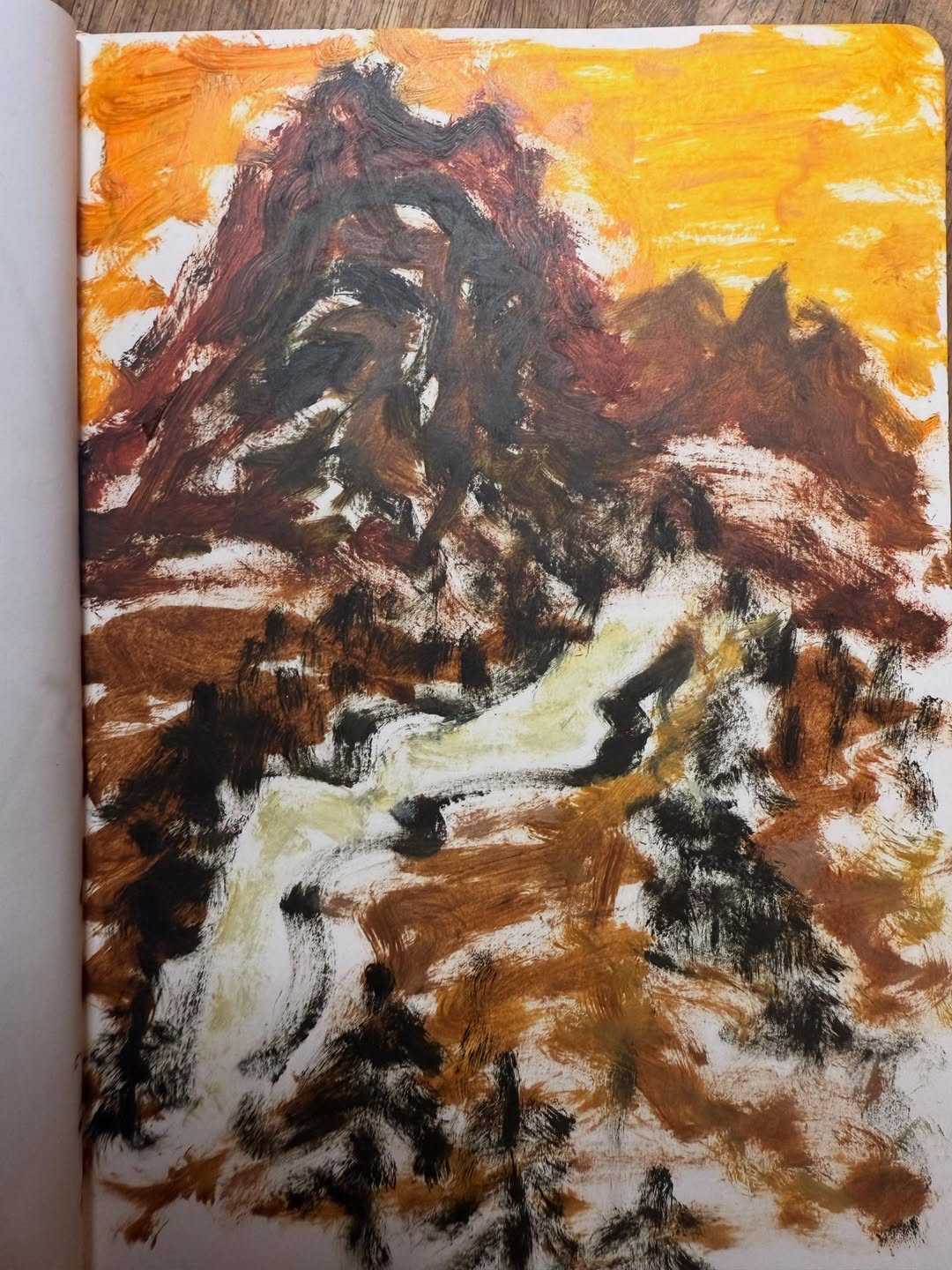
The Dingbats* Pro Collection is especially suited to this kind of thinking because its 160gsm mixed media paper supports sketches, brush pens, markers, calligraphy, moodboards, light washes, and visual notes. Some ideas need more than lines. They need room.

Why Entrepreneurs and Professionals Keep Notebooks
Notebooks are not only for artists, scientists, and writers. They are also powerful work tools. A professional notebook can hold meeting notes, decisions, feedback, client details, campaign ideas, product notes, project timelines, and lessons learned. It helps keep thinking visible across days, weeks, and months.
The most useful work notes are not always the most formal ones. Sometimes the important note is a quick observation after a meeting. A sentence someone said. A reason a decision changed. A problem that keeps appearing. A small idea that could become a bigger direction.
What Work Notebooks Help With
| Use | Why It Matters |
|---|---|
| Meeting notes | Preserve decisions and follow-ups |
| Project planning | Track how ideas develop |
| Feedback | Keep useful comments visible |
| Strategy | Connect goals, actions, and results |
| Problem solving | Break vague issues into parts |
| Campaign ideas | Capture angles before they disappear |
| Lessons learned | Make future work stronger |
| Follow-ups | Reduce mental clutter |
The Dingbats* Earth Collection works well for structured work notes because it supports planning, indexing, routines, trackers, and organized collections. A notebook helps work become traceable.

A Notebook Makes Thinking Visible
One reason notebooks are so useful is that they turn invisible thought into something you can see. Inside the mind, an idea can feel clear. On the page, you may realize it needs more work. That is not a failure. That is the point.
Writing reveals gaps.
Sketching reveals proportions.
Listing reveals priorities.
Mapping reveals connections.
Reviewing reveals patterns.
Crossing out reveals progress.
A notebook makes thinking visible enough to improve.
What the Page Shows You
| On the Page | What It Reveals |
|---|---|
| Repeated words | What you keep returning to |
| Crossed-out lines | How the idea changed |
| Arrows | Connections between thoughts |
| Lists | What matters most |
| Blank spaces | What still needs thought |
| Sketches | Visual possibilities |
| Dates | How thinking developed over time |
| Old notes | What you no longer think |
A notebook is not only where thoughts are recorded. It is where thoughts become clearer.
Notebooks Let You Think Without an Audience
Some ideas need privacy. Before an idea can be shared, sold, published, presented, or explained, it often needs time in a private space. A notebook gives that space.
You can write badly.
Sketch roughly.
Contradict yourself.
Ask obvious questions.
Make a messy list.
Change your mind.
Start again.
This matters because public thinking often feels polished. But real thinking is not polished at first. It is exploratory.
Why Private Thinking Matters
| Private Space Allows | Why It Helps |
|---|---|
| Messy drafts | You can begin before you are ready |
| Honest questions | You do not need to sound clever |
| Experiments | You can test without pressure |
| Contradictions | You can discover what you really think |
| Mistakes | You can learn without performing |
| Revisions | You can improve before sharing |
| Slow development | Ideas can mature over time |
A notebook gives thoughts a place before they need to become presentable. That is one reason it remains so valuable.

Why Review Is Part of the Notebook Habit
Writing something down is only the beginning. Great notebooks become useful because people return to them. A note written today may connect to something next month. A sketch that seemed random may become useful later. A question may make more sense after more experience. An observation may become part of a larger pattern. Review turns notes into knowledge.
What to Look for When Reviewing Old Notes
| Look For | Why It Matters |
|---|---|
| Repeated ideas | Shows what keeps returning |
| Unanswered questions | May now have answers |
| Useful fragments | Can become projects, posts, designs, or decisions |
| Old assumptions | Shows how your thinking changed |
| Patterns | Connects scattered notes |
| Forgotten ideas | Gives them a second chance |
| Finished threads | Reveals progress |
| Unfinished threads | Shows what still matters |
A notebook is not a graveyard for ideas. It is a place they can wait until you are ready for them.
The Difference Between Taking Notes and Keeping a Notebook
Taking notes is an action. Keeping a notebook is a practice.
Taking notes can be temporary: write it down, use it, move on. Keeping a notebook is more layered. It means your notes accumulate. They begin to show patterns. They become a record of your thinking over time.
A notebook becomes more valuable because it gathers context.
Taking Notes vs Keeping a Notebook
| Taking Notes | Keeping a Notebook |
|---|---|
| Captures information | Builds a record |
| Often task-specific | Can follow your life and work over time |
| May be temporary | Becomes worth returning to |
| Focuses on immediate use | Supports long-term thinking |
| Can be scattered | Creates continuity |
| Helps you remember | Helps you understand patterns |
A single note can be useful. A notebook full of notes can become a map of your mind.
How to Keep a Notebook Like a Great Thinker
You do not need to be a scientist, inventor, writer, or artist to keep a valuable notebook. You only need to use the page as a place for active thought.
Start by writing down what catches your attention. Then return to it. Add dates. Ask questions. Make connections. Leave space for unfinished ideas. Let the notebook become a place where thoughts are allowed to develop.
Simple Notebook Habits
| Habit | How to Use It |
|---|---|
| Date each page | Gives your thinking context |
| Keep a question list | Save problems and curiosities |
| Capture observations | Write down what you notice |
| Sketch when words are not enough | Use diagrams, symbols, or visual notes |
| Copy useful lines | Save quotes or phrases that matter |
| Add your response | Write why the idea matters to you |
| Review weekly | Find patterns and forgotten ideas |
| Index important pages | Make strong notes easier to find |
| Use symbols | Mark ideas, questions, actions, and references |
| Keep it imperfect | Let the notebook be a working space |
The goal is not to make your notebook look like someone else’s. The goal is to make it useful to your own mind.
A Simple Great Thinker Notebook Setup
A good notebook setup does not need to be complicated. You can begin with a few repeatable sections.
Notebook Setup
| Section | What to Include |
|---|---|
| Observations | Things you notice in life, work, nature, reading, or travel |
| Questions | Problems, curiosities, doubts, and “what if” thoughts |
| Ideas | Concepts, projects, titles, designs, plans, and fragments |
| Quotes | Lines from books, articles, conversations, or talks |
| Sketches | Visual notes, diagrams, layouts, and shapes |
| Experiments | Things to test, try, compare, or explore |
| Reflections | What changed, what worked, what you learned |
| Index | Important pages you want to find again |
This setup works because it gives unfinished thinking a structure without making the notebook rigid. A notebook should help ideas move. Not trap them.

Observation Page Template
Observation is one of the most powerful notebook habits. Use this template when something catches your attention.
Observation Page
| Prompt | Your Notes |
|---|---|
| Date | |
| What did I notice? | |
| Where did I notice it? | |
| Why did it stand out? | |
| What does it remind me of? | |
| What question does it raise? | |
| Could this be useful later? |
This works for nature, people, work, design, travel, reading, and daily life. Observation is where many ideas begin.
Question Page Template
Questions are often more valuable than quick answers. Use this page to collect the questions you want to keep thinking about.
Question Page
| Prompt | Your Notes |
|---|---|
| Question | |
| Why am I asking this? | |
| What do I already know? | |
| What do I need to find out? | |
| What connects to this? | |
| Possible answers | |
| Next step |
A question written down becomes easier to return to. And returning is where thinking deepens.
Idea Development Template
Use this when a small thought might become a project, article, design, campaign, product, plan, or creative piece.
Idea Development Page
| Prompt | Your Notes |
|---|---|
| Idea | |
| Where it came from | |
| Why it matters | |
| Who it is for | |
| What problem it solves | |
| Related notes | |
| First version | |
| What to test next |
This turns an idea from a passing thought into something you can work with.
Which Dingbats* Notebook Works Best for Thinking?
Different kinds of thinking need different kinds of pages.
Some people think in words.
Some think in systems.
Some think in sketches.
Some need space for notes, scraps, and diagrams.
Some want a notebook that feels personal enough to carry every day.
Dingbats* collections support different thinking styles.
Dingbats* Notebook Guide for Thinkers
- Wildlife Collection: Everyday notes, personal observations, journaling, reading notes, travel thoughts
- Earth Collection: Structured thinking, planning, trackers, indexes, project systems
- Pro Collection: Sketches, diagrams, visual thinking, moodboards, creative development
The Wildlife Collection: For Everyday Observers
The Dingbats* Wildlife Collection is ideal for people who notice things everywhere.
A sentence from a conversation.
A detail from a walk.
A thought during travel.
A line from a book.
A personal memory.
A small idea that might become something later.
Wildlife notebooks feel expressive and personal, which makes them a strong fit for everyday observation.
Use Wildlife For
| Use | Why It Works |
|---|---|
| Daily notes | Capture thoughts as they happen |
| Observations | Record details from life, nature, work, or travel |
| Journaling | Reflect on ideas and experiences |
| Reading notes | Save quotes, questions, and reactions |
| Travel notes | Capture places, routes, and impressions |
| Personal ideas | Keep fragments close |
Wildlife is for the thinker who wants a notebook with character. The kind of notebook that becomes part of daily life.

The Earth Collection: For Structured Thinkers
The Dingbats* Earth Collection is ideal for people who like to organize their thoughts.
Some minds need indexes, trackers, systems, sections, routines, timelines, and planning pages. Earth supports that style of thinking by making notes easier to structure and revisit.
Use Earth For
| Use | Why It Works |
|---|---|
| Project planning | Organize ideas into steps |
| Indexes | Find important notes later |
| Habit tracking | See patterns over time |
| Monthly reviews | Turn experience into reflection |
| Goal setting | Connect ideas to action |
| Research notes | Keep sources and thoughts together |
| Collections | Group quotes, lists, themes, and references |
Earth is for thinkers who want their notebook to become a system. Not just a place for notes. A place for order.

The Pro Collection: For Visual Thinkers
The Dingbats* Pro Collection is ideal for people whose ideas arrive visually.
Sketches.
Diagrams.
Layouts.
Color palettes.
Maps.
Moodboards.
Lettering.
Visual notes.
Creative tests.
With 160gsm mixed media paper, Pro gives more freedom to explore ideas that need space, image, and texture.
Use Pro For
| Use | Why It Works |
|---|---|
| Sketching | Capture visual ideas quickly |
| Diagrams | Make complex thoughts clearer |
| Moodboards | Build creative direction |
| Brush pens and markers | Add expressive visual layers |
| Calligraphy | Turn language into image |
| Light washes | Add atmosphere and color |
| Creative research | Collect references, swatches, and fragments |
Pro is for the thinker who needs to see an idea before they can explain it.

Why Messy Notebooks Are Often the Most Valuable
A notebook does not need to be neat to be useful. In fact, some of the most valuable notebooks are messy because they show thinking in progress.
Crossed-out words mean the idea changed.
Arrows mean connections appeared.
Blank spaces mean something was still unknown.
Unfinished lists mean the mind was still working.
Rough sketches mean the visual idea was arriving.
Repeated phrases mean something mattered.
Mess is not always a lack of order. Sometimes it is evidence of development.
What Messy Notes Can Show
| Messy Detail | What It Reveals |
|---|---|
| Cross-outs | Revision and change |
| Arrows | Connections |
| Repeated words | Recurring ideas |
| Doodles | Visual thinking |
| Half-sentences | Early ideas |
| Page corners | Quick capture |
| Mixed formats | Flexible thought |
| Notes in margins | Active response |
A perfect notebook may look beautiful. A used notebook often tells the better story.
The Notebook as Evidence of Process
The finished result rarely shows the full story.
A published book does not show every discarded sentence.
A scientific discovery does not show every failed test.
A design does not show every rejected sketch.
A campaign does not show every rough angle.
A business decision does not show every doubt.
The notebook remembers the process. That is why notebooks can be so valuable after the work is done. They show how an idea became itself.
What Process Notes Preserve
| Process Detail | Why It Matters |
|---|---|
| First ideas | Shows where the work began |
| Rejected directions | Explains what was avoided |
| Questions | Reveals uncertainty |
| Tests | Records what worked and failed |
| Feedback | Shows what changed the work |
| Timelines | Gives development context |
| Reflections | Turns experience into learning |
| Final notes | Records what to do differently next time |
A notebook gives process a place. And process is often where the real learning lives.
Famous Notebook Habits You Can Use Today
You do not need to copy anyone’s notebook exactly. But you can borrow the habits behind them.
Notebook Habits Inspired by Great Thinkers
| Habit | How to Try It |
|---|---|
| Observe daily | Write down one thing you noticed |
| Ask questions | Keep a page of open questions |
| Sketch ideas | Draw even if you are not an artist |
| Compare patterns | Look for what repeats across notes |
| Date everything | Give thoughts a timeline |
| Keep fragments | Do not wait for complete ideas |
| Review old notes | Let ideas reconnect over time |
| Mix subjects | Allow work, life, reading, and creativity to overlap |
| Preserve process | Keep drafts, tests, and mistakes |
| Return often | A notebook becomes stronger with use |
The point is not to become Leonardo, Darwin, Curie, or anyone else. The point is to take your own thinking seriously enough to record it.
A Weekly Notebook Review for Better Ideas
A weekly review helps turn scattered notes into useful insight. You do not need to review everything. Just look for what still feels alive.
Weekly Review Template
| Prompt | Your Notes |
|---|---|
| What idea kept returning this week? | |
| What question still feels important? | |
| What did I notice more than once? | |
| What note could become useful later? | |
| What needs more research? | |
| What should I test or try next? | |
| What did I learn from this week’s notes? |
A review turns a notebook from storage into a thinking tool. Old notes become useful when they are revisited.
What to Write Down Before It Disappears
The best time to write something down is often before you are sure it matters. Many important ideas begin as small details.
Write These Down Quickly
| Thought Type | Example |
|---|---|
| Sudden ideas | A product, article, project, title, or solution |
| Repeated questions | Something your mind keeps returning to |
| Observations | People, places, details, behavior, nature |
| Useful phrases | Lines, names, slogans, sentences |
| Problems | Things that feel unclear or inefficient |
| Patterns | Things that happen more than once |
| Feedback | Comments that might improve the work |
| Decisions | Why something was chosen |
| References | Books, images, examples, sources |
| Feelings | What a moment or phase actually felt like |
A thought does not need to be important yet. It only needs to be worth catching.
Frequently Asked Questions
Why did great thinkers keep notebooks?
Great thinkers kept notebooks to capture observations, questions, sketches, experiments, ideas, quotes, and unfinished thoughts. Notebooks helped them preserve details, explore connections, and develop ideas over time.
Are notebooks good for creative thinking?
Yes. Notebooks are useful for creative thinking because they give ideas a private space to begin, change, connect, and develop before they become finished work.
What should I write in a thinking notebook?
You can write observations, questions, ideas, quotes, sketches, diagrams, lists, project notes, reading notes, experiments, reflections, and anything you want to return to later.
How do notebooks help with ideas?
Notebooks help with ideas by capturing them before they disappear, making them visible, allowing you to review them later, and helping you connect them with other thoughts over time.
Do I need to keep my notebook organized?
Not perfectly. A notebook should be useful before it is neat. You can add simple structure with dates, headings, symbols, and an index, but messy notes can still be valuable.
Which Dingbats* notebook is best for thinkers?
The Wildlife Collection works well for everyday observations and personal notes. The Earth Collection works well for structured thinking, planning, and indexes. The Pro Collection works well for visual thinking, sketches, diagrams, and creative development.

Leave a comment
This site is protected by hCaptcha and the hCaptcha Privacy Policy and Terms of Service apply.